Оставить сообщение
Если вас заинтересовала наша продукция и вы хотите узнать больше подробностей, пожалуйста, оставьте сообщение здесь, мы ответим вам как можно скорее.

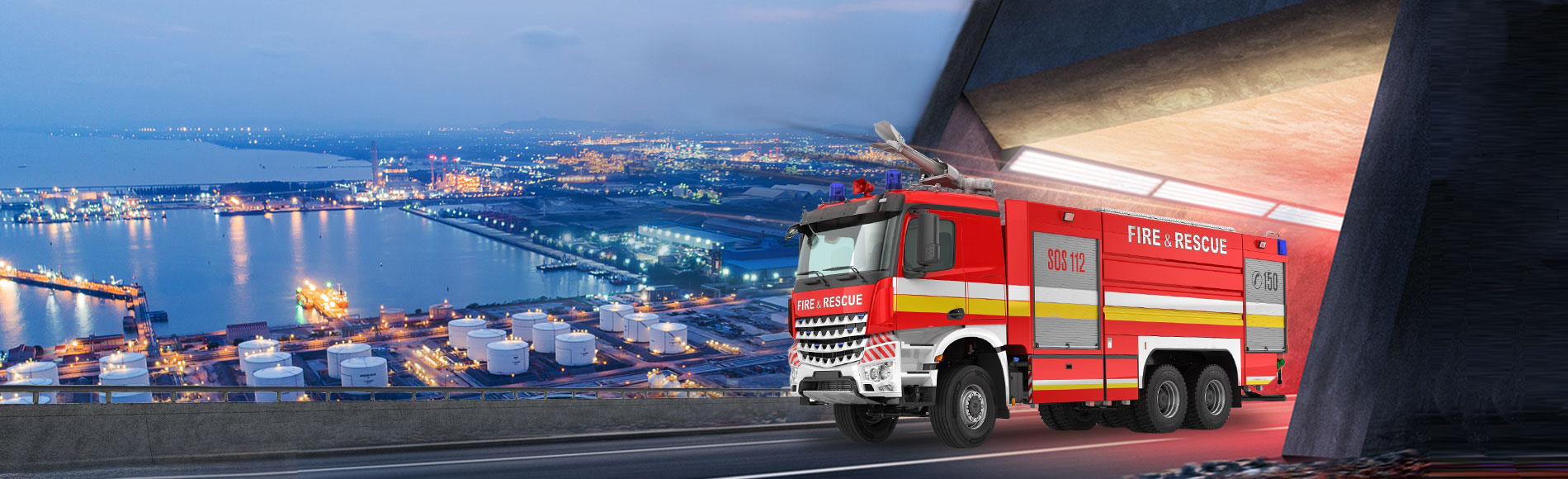
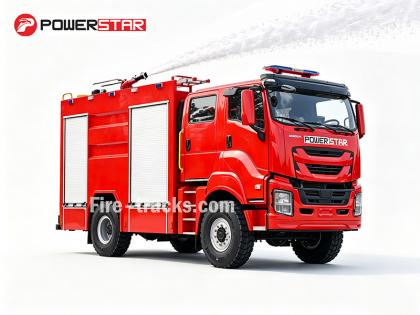
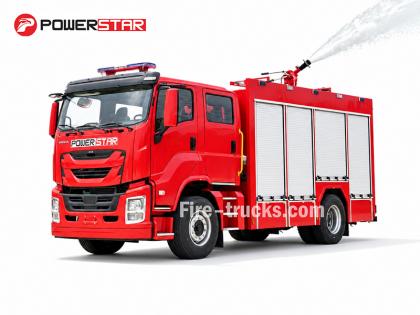
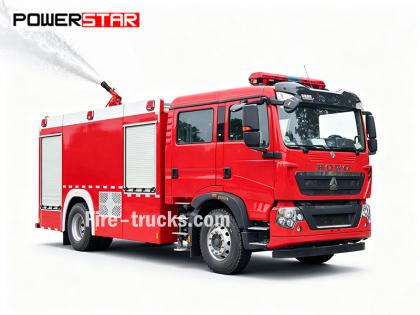
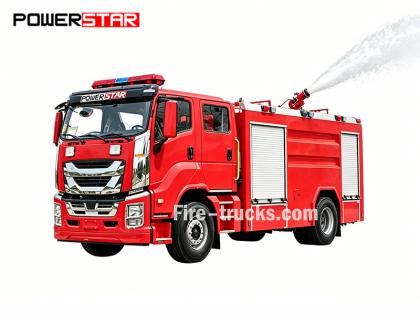
Foam fire trucks combine a dedicated foam concentrate tank with a separate water tank and a precision proportioning system. They use a proportioning system to introduce foam concentrate into the water stream at a specified concentration, commonly 1%, 3%, or 6%, depending on the foam concentrate and firefighting application. The dual-tank design allows firefighters to use water alone when foam is not required and introduce foam concentrate only when needed. This improves operational flexibility, helps control foam consumption, and allows the firefighting system to be configured for different fire hazards.
The core working principle and key technology of foam fire trucks, particularly why they have both water and foam tanks—are the focus of many customers. Let's learn about it today.
Quick Answer:
Foam fire trucks normally use separate water and foam concentrate tanks because water and foam concentrate are required in different proportions and are intended to be combined during operation rather than stored as a premixed solution for long periods. The water tank provides the main water supply, while the foam tank stores concentrated foam agent. A proportioning system controls how much concentrate is introduced into the water stream, allowing the truck to switch between water-only and foam firefighting modes.
I. What Are the Main Components of a Foam Fire Truck?
1. Water Tank
Corrosion-resistant construction (carbon steel with anti-corrosion coating or stainless steel), capacities ranging from 4,000 to 6,000 liters. Equipped with baffles to reduce liquid surging during vehicle movement and flexible mounts to absorb chassis flexing on rough terrain.
2. Foam Concentrate Tank
Stainless steel construction to resist chemical attack from active foam concentrates, typically 500-2,000 liters capacity. Depending on the foam concentrate and system design, the tank may incorporate features such as circulation or agitation arrangements to help maintain concentrate condition during storage.
3. Foam Proportioning System
A proportioning system that draws foam concentrate from the dedicated foam tank and introduces it into the water stream at a specified concentration. Depending on the foam concentrate and system design, proportioning may use balanced-pressure, pump-driven, or venturi-based technology.
4. Fire Pump
The fire pump is the power source of the entire foam system. It draws water from the water tank and pressurizes it to the required flow and pressure for firefighting operations. The pump is typically driven by the vehicle's power take-off (PTO) or an independent engine, and must be compatible with the proportioning system to ensure accurate foam concentrate injection across varying flow rates. Common configurations include single-stage centrifugal pumps for standard operations and multi-stage pumps for high-pressure applications.
5. Foam Monitor
The foam monitor delivers the finished foam solution toward the fire source at a controlled flow rate and discharge range. Depending on the vehicle configuration, the monitor may be manually or remotely operated and can be equipped with adjustable flow and discharge patterns for different firefighting applications.
II. Why Do Foam Fire Trucks Use Separate Water and Foam Tanks?
To understand the core design of a foam fire truck, we must first answer one question: Why aren't water and foam concentrate normally stored as a premixed solution?
In a conventional foam firefighting system, water and foam concentrate are normally stored separately rather than as a premixed solution.
1. Long-Term Storage Can Affect Foam Solution Stability
Once foam concentrate is diluted with water, the resulting foam solution is generally intended for immediate or short-term use rather than long-term storage. Its stability can depend on the foam formulation, water quality, temperature, contamination, and storage conditions.
2. Premixed Foam Solution Can Be Affected by Storage Conditions
A foam solution is a formulated mixture whose stability depends on several factors:
• Foam formulation
Different foam concentrates have different chemical formulations, so their stability after dilution can vary.
• Water quality and storage conditions
Water quality, temperature, contamination, and storage conditions can affect the stability of the foam solution.
• Concentration and firefighting performance
Long-term storage may make it more difficult to maintain the intended concentration and firefighting performance.
3. Inability to Switch Firefighting Modes
If there is only one large tank and it has already been premixed with foam solution, the vehicle loses the ability to use plain water.
Upon arrival at the scene, firefighters must assess the situation and make decisions:
• Ordinary structural fires (Class A) require plain water only—no foam needed
• Fuel fires (Class B) require a 3% foam proportion
• Polar solvent fires require a 6% foam proportion
III. How Do the Water Tank and Foam Tank Work Together?
Step 1: Water tank supplies the fire pump
Water from the tank enters the fire pump through the suction hose.
Step 2: Fire pump increases pressure
The fire pump pressurizes the water and provides the flow required by the firefighting system.
Step 3: Foam tank supplies foam concentrate
When the operator activates the foam system, foam concentrate flows from the foam tank into the foam piping.
Step 4: Proportioner controls foam flow
The proportioner adds a controlled amount of foam concentrate into the water stream at the preset ratio.
Step 5: Foam solution is formed
Water and foam concentrate complete mixing to form foam solution.
Step 6: Discharge through monitor or foam nozzle
The foam solution is discharged through the monitor, foam nozzle, or other foam-generating devices toward the fire source.
IV. Why Is the Foam Tank Typically Much Smaller Than the Water Tank?
The foam tank is typically much smaller than the water tank—and this is not a cost-saving measure, but a direct result of how foam proportioning works.
1. Foam concentrate is not mixed 1:1 with water
Foam concentrate is injected into the water stream at a specific percentage—typically 3% or 6%. At a nominal 3% proportion, 1,000 L of finished foam solution contains approximately 30 L of foam concentrate and 970 L of water.
2. The capacity ratio is driven by consumption rates
For example, at a discharge rate of 1,000 L/min and a 3% proportion, the system consumes approximately 30 L/min of foam concentrate. A 500 L foam tank would therefore provide roughly 16.7 minutes of continuous foam solution discharge at this rate, assuming the full tank volume is usable.
As a result, foam tanks are commonly much smaller than water tanks because foam concentrate is consumed at a much lower volumetric rate. However, the actual water-to-foam capacity ratio depends on the vehicle's mission, foam type, required discharge duration, and system design.
3. The foam tank size depends on the vehicle's operational mission
• Urban main battle trucks: primarily for structural fires—foam for small-scale fuel fires only → smaller foam tank (e.g., 500 L)
• Industrial fire trucks: primarily for tank farms or chemical plant fires—large-volume, extended foam discharge → larger foam tank (e.g., 2,000 L)
V. Typical Configurations and Selection Guide
Typical water-to-foam tank ratios by mission profile:
| Vehicle Type | Water Tank | Foam Tank | Typical Use | ||
| Urban Fire Truck | 4,000 L | 500 L |
|
||
| Industrial Foam Fire Truck | 6,000 L | 2,000 L | Petrochemical and industrial fire protection | ||
| Heavy-duty Industrial Fire Truck | 5,000–10,000 L | 1,000–2,000 L | Large industrial and hazardous-area applications |
VI. Common Misconceptions About Foam Fire Truck Tanks
Misconception 1: Water and foam concentrate are stored together
Generally not. They are stored separately in water and foam tanks, and mixed through the proportioning system during use.
Misconception 2: A larger foam tank means stronger firefighting capability
Not necessarily. Foam tank capacity mainly determines foam concentrate reserve. The fire pump, proportioner, and monitor together determine the actual output capability of the entire foam system.
Misconception 3: All foam fire trucks have the same water-to-foam tank ratio
No. Different firefighting missions require different system configurations.
Misconception 4: Foam fire trucks must always have a large water tank
Not necessarily. Some industrial fire trucks can connect directly to on-site fire water mains to obtain large volumes of water from external sources.
Misconception 5: More foam concentrate is always better
Not true. What really matters is using the correct proportion according to the foam product specifications and system design.
VII. Frequently Asked Questions (FAQ)
Q1: Can a foam fire truck fight fires using only plain water?
A: Yes. The water tank and foam tank are independent. When foam is not needed, firefighters can simply not activate the proportioning system and use plain water from the water tank.
Q2: Can foam concentrate be sprayed directly onto a fire?
A: No, not in a conventional foam proportioning system. Foam concentrate is normally metered into the water stream at the specified proportion before the solution is discharged through a foam-generating device. Applying concentrate directly would not produce the intended finished foam and would not provide the designed firefighting performance of the system.
Q3: Why are there two proportions for Class B foam—3% and 6%?
A: Because fire types differ. The required proportion depends on the foam concentrate and the fire hazard. Many conventional products use 3% for hydrocarbon fuels and 6% for certain polar-solvent fuels, but the actual proportion must follow the foam manufacturer's specifications and the system design.
Q4: Can Class A and Class B foam be mixed together?
A: No. Class A and Class B foam concentrates should not be mixed unless the manufacturer specifically confirms compatibility. They are formulated for different firefighting purposes and have different application characteristics.
Q5: How long can foam concentrate be stored in a foam tank?
A: Foam concentrate storage life depends on the specific product, manufacturer requirements, storage conditions, and foam formulation. Instead of relying only on a fixed number of years, operators should follow the manufacturer's storage recommendations and conduct periodic inspection or laboratory testing when required.
Q6: How should the water-to-foam tank ratio be determined for a foam fire truck?
A: It depends on the vehicle's primary mission. Urban fire trucks may carry configurations such as 4,000 L of water and 500 L of foam concentrate, while industrial foam fire trucks may be configured with larger foam reserves, such as 6,000 L of water and 2,000 L of foam concentrate.
VIII. Summary
The dual-tank design of foam fire trucks is a deliberate engineering choice. The use of separate water and foam tanks is not meant to increase configuration complexity, but to ensure firefighting reliability.
Water and foam concentrate are normally stored separately rather than as a premixed solution for long-term storage. Premixing can affect solution stability, may create storage and concentration-management issues, and would reduce the vehicle's flexibility to switch between water-only and foam firefighting modes.


Вас может быть заинтересован в следующей информации
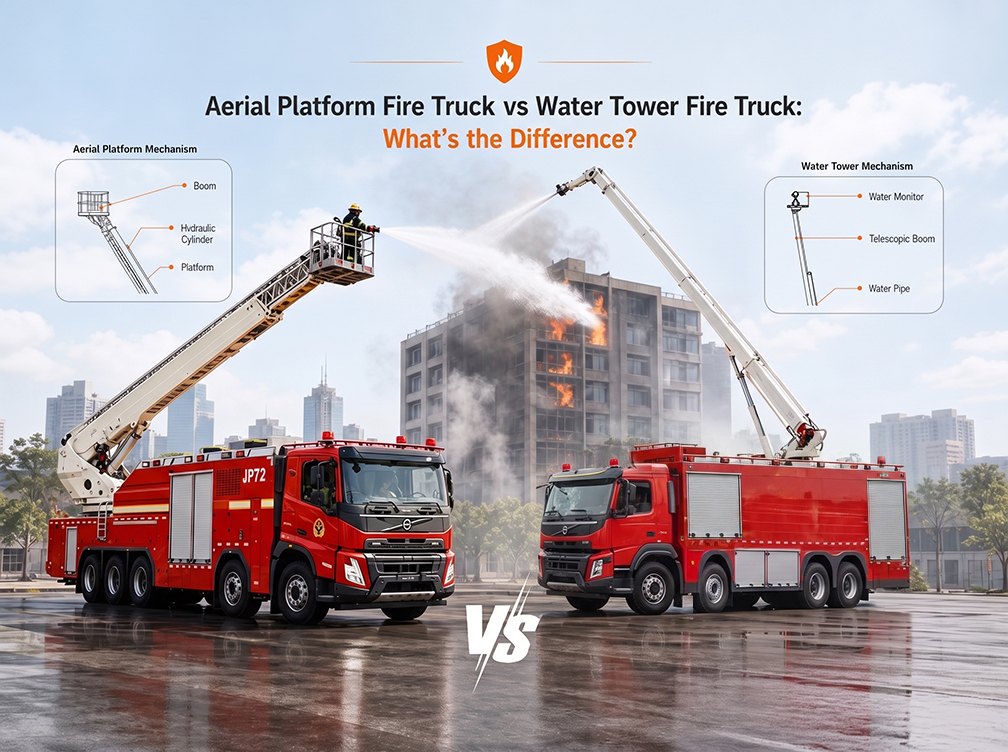
Когда речь идет о тушении пожаров в высотных зданиях, промышленных объектах или крупных складах, автолестницы и другие высотные пожарные автомобили являются незаменимыми. Но среди различных типов высотной пожарной техники два часто вызывают путаницу: пожарный автомобиль с подъемной платформой и пожарный автомобиль с водяной башней. Хотя на первый взгляд они могут выглядеть похоже — оба оснащены гидравлическими стрелами и предназначены для тушения пожаров на высоте, — они выполняют принципиально разные задачи. В этой статье разбираются ключевые различия между этими двумя типами автомобилей, что помогает специалистам пожарных служб, менеджерам по закупкам и дистрибьюторам оборудования принимать обоснованные решения с учетом эксплуатационных потребностей. I. Что такое автомобили с подъемной платформой? Согласно китайскому национальному стандарту GB 7956.12-2015, оба автомобиля относятся к категории высотных пожарных автомобилей— транспортных средств, оснащенных подъемными стрелами, поворотными платформами и пожарным оборудованием для работы на большой высоте. Однако их конкретные определения подчеркивают важное различие. Пожарный автомобиль с подъемной платформой Пожарный автомобиль с подъемной платформой оснащен складывающейся или комбинированной складывающейся телескопической стрелой, рабочей платформой для персонала, поворотной платформой и пожарными устройствами.Определяющей особенностью является рабочая платформа (люлька) на конце стрелы, где пожарные могут находиться для выполнения спасательных и противопожарных операций .Ключевые характеристики:• Оснащен платформой, способной выдерживать от 750 фунтов до более чем 1 500 фунтов персонала и оборудования• Предназначен как для спасательных работ и тушения пожаров — пожарные могут непосредственно работать с платформы• Платформа может использоваться с устройствами управления спуском, гидравлическими лебедками или спасательными желобами • Обеспечивает больший горизонтальный вылет и больший рабочий диапазон по сравнению с водяными башнямиII. Что такое пожарные автомобили с водяной башней? Пожарный автомобиль с водяной башней оснащен складывающейся или комбинированной складывающейся телескопической стрелой, поворотной платформой и пожарными устройствами —без платформы для персонала. Вместо этого на конце стрелы устанавливается пожарный ствол (водомет), которым можно управлять дистанционно с земли. Ключевые характеристики:• Нет платформы для персонала — пожарные работают с земли с помощью дистанционного управления• Ориентирован исключительно на тушение пожаров на высоте, а не на спасательные работы• Обеспечивает исключительно высокий расход воды —превышающий 2 000 галлонов в минутуна многих промышленных моделях• Предназначен для промышленной противопожарной защиты, где спасательные возможности не требуются III. Сравнение бок о бок Характеристика Пожарная машина с подъёмной платформой Пожарная машина с водонапорной башней Основная функция Спасение + тушение пожаров Только тушение пожаров Оборудо...
Подробности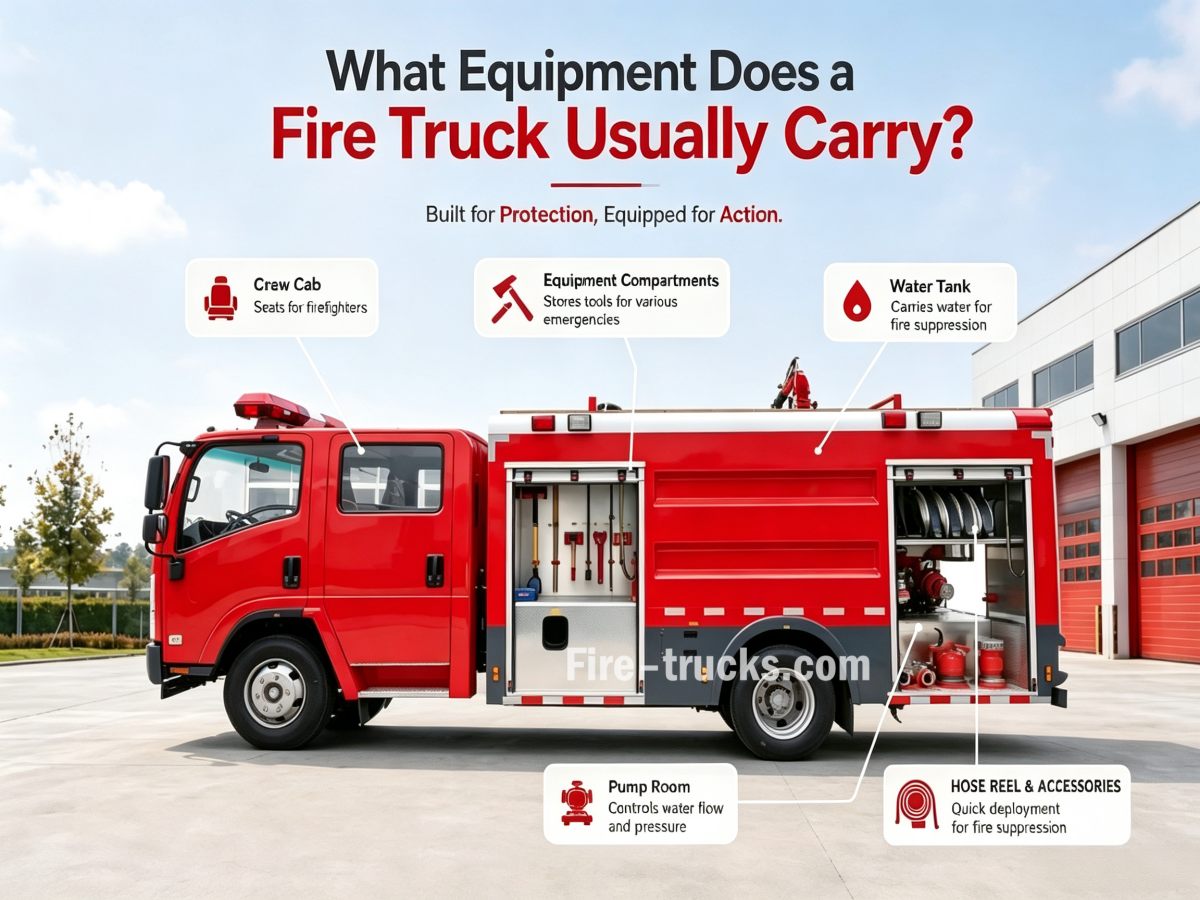
Пожарная машина обычно перевозит оборудование для тушения пожаров, подачи воды, спасательных работ и защиты безопасности. К стандартному оборудованию относятся пожарные насосы, цистерны для воды, пожарные рукава, пожарные стволы, лафетные стволы, клапаны, пожарные лестницы, спасательные инструменты, защитное снаряжение и устройства связи. В этой статье систематически разбираются классификация, функции и особенности выбора стандартногопожарной машины оборудования, помогая специалистам по закупкам и конечным пользователям получить полное представление о конфигурациях пожарной техники. I. Классификация оборудования пожарных машин 1. Противопожарное оборудование— Основные инструменты для непосредственного тушения пожара, включая пожарные стволы, лафетные стволы, пожарные рукава, водосборники и переходники. 2. Спасательное оборудование и оборудование для вскрытия конструкций— Инструменты для создания путей доступа при спасательных и противопожарных операциях, включая гидравлический спасательный инструмент, пожарные топоры, монтировки, ломы, отрезные пилы и цепные пилы. 3. Спасательное и жизнеобеспечивающее оборудование— Оборудование для поиска, перемещения и защиты людей, включая носилки, спасательные верёвки, страховочные крюки, устройства управления спуском, автономные дыхательные аппараты (SCBA) и запасные воздушные баллоны. 4. Оборудование для удаления дыма и освещения— Оборудование для улучшения условий на месте пожара, включая дымососы, мобильные осветительные мачты и переносные поисковые прожекторы высокой интенсивности. 5. Средства индивидуальной защиты (СИЗ)— Снаряжение для защиты пожарных, включая каски, защитную одежду для тушения пожаров в зданиях, перчатки, сапоги и страховочные пояса. 6. Оборудование связи и разведки— Оборудование для сбора информации на месте пожара и координации управления, включая двусторонние радиостанции, тепловизионные камеры и датчики токсичных газов. II. Противопожарное оборудование на пожарных машинах 1. Пожарный насос Пожарный насос является источником энергии для всех операций по тушению пожара. Он механически повышает давление воды, придавая ей достаточную кинетическую энергию для выполнения полного процесса «забор воды → повышение давления → подача → выпуск». Типичные характеристики пожарных насосов: •Стандартный пожарный насос среднего давления (тип CB10/30):Расход ≥30 л/с, номинальное давление 1,0 МПа, установка в задней части. Подходит для стандартных автоцистерн и пенных пожарных машин, удовлетворяя большинству требований городского и промышленного пожаротушения по подаче воды. •Пожарный насос среднего/высокого давления:Расход при низком давлении 30 л/с при 1,0 МПа, расход при высоком давлении 20 л/с при 2,0 МПа, установка в задней части. Двухрежимная конструкция поддерживает как подачу большого объёма воды (низкое давление), так и подачу на большие расстояния/на большую высоту (высокое давление) одним насосом. Идеально подходит для городских основных пожарных машин и сценариев тушения пожаров в высотных...
Подробности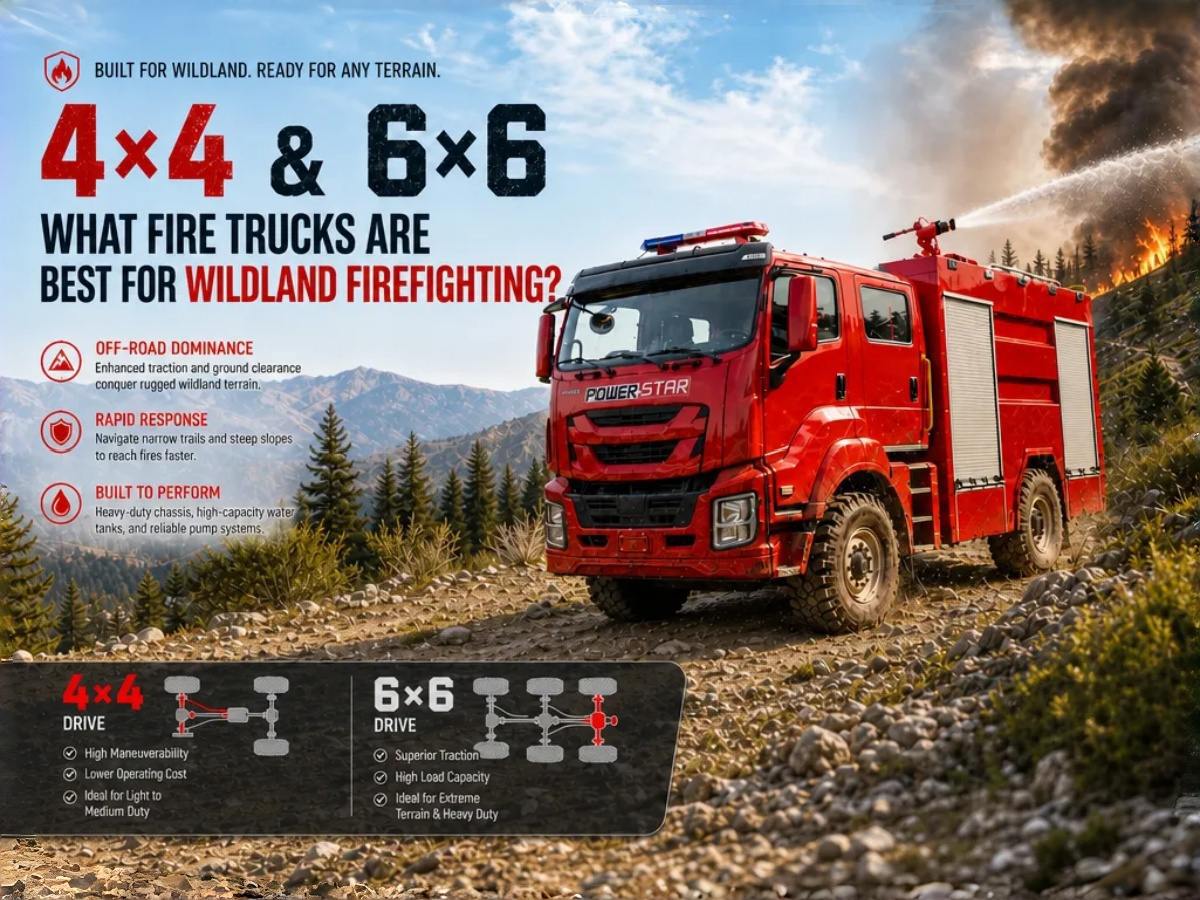
Борьба с лесными пожарами представляет собой задачи, принципиально отличающиеся от тушения пожаров в зданиях. В удалённых лесах, на пастбищах и в горной местности пожарные автомобили должны передвигаться по узким тропам, подниматься по крутым склонам и работать вдали от гидрантов или источников воды. Выбор правильного пожарного автомобиля является стратегическим решением, которое напрямую влияет на время реагирования, безопасность экипажа и эффективность тушения пожара. Эта статья содержит подробный разбор наиболее подходящих типов пожарных автомобилей для борьбы с лесными пожарами, их основных характеристик и методов выбора, помогая принять правильное решение на основе конкретных эксплуатационных требований. Краткий ответ Лесные пожары характеризуются большими площадями возгорания, сложным рельефом, ограниченными источниками воды и плохими дорожными условиями, поэтому не существует одного пожарного автомобиля, способного справиться со всеми сценариями лесных пожаров. В целом, для борьбы с лесными пожарами в основном используются следующие типы пожарных автомобилей: • Лёгкие пожарные автомобили для лесных пожаров: для доступа по лесным дорогам и быстрого реагирования• Полноприводные пожарные автомобили 4×4 для лесных пожаров: для горной и холмистой местности• Пожарные автомобили 6×6 для лесных пожаров: для масштабных лесных пожаров и продолжительных операций• Водоцистерны: для непрерывной подачи воды и поддержки• Пенные пожарные автомобили: для нефтяных объектов, лесной техники или особых видов пожаров• Спасательные автомобили: для связи, освещения, вскрытия препятствий и логистической поддержки I. Почему для лесных пожаров требуются специализированные пожарные автомобили? Лесные пожары принципиально отличаются от пожаров в зданиях по нескольким важным параметрам: Ключевые характеристики лесных пожаров:• Большие площади возгорания, охватывающие гектары земли• Быстро меняющееся направление ветра• Сложный и пересечённый рельеф• Ограниченный доступ или отсутствие доступа к гидрантам и источникам воды• Узкие грунтовые лесные дороги• Сложные условия для связи Стандартные городские пожарные автомобили, как правило, не подходят для борьбы с лесными пожарами по следующим причинам: •Отсутствие полного привода 4×4 или системы полного привода для грунтовых горных дорог и крутых склонов;•Большие размеры и низкий дорожный просвет приводят к тому, что они могут застревать на узких лесных тропах и мягком грунте;•Городские насосы рассчитаны на высокий расход при умеренном давлении, тогда как операции в лесной местности требуют высокого давления при длинных рукавных линиях и ограниченном запасе воды — это принципиально другой подход. II. Распространённые типы пожарных автомобилей для лесных пожаров Тип пожарного автомобиля Ключевые характеристики Подходящие сценарии применения Лёгкий пожарный автомобиль для лесных пожаров Высокая мобильность, компактные размеры Патрулирование лесов, первоначальная атака Пожарный автомобиль 4x4 для лесных пожаров Высокая проходи...
Подробности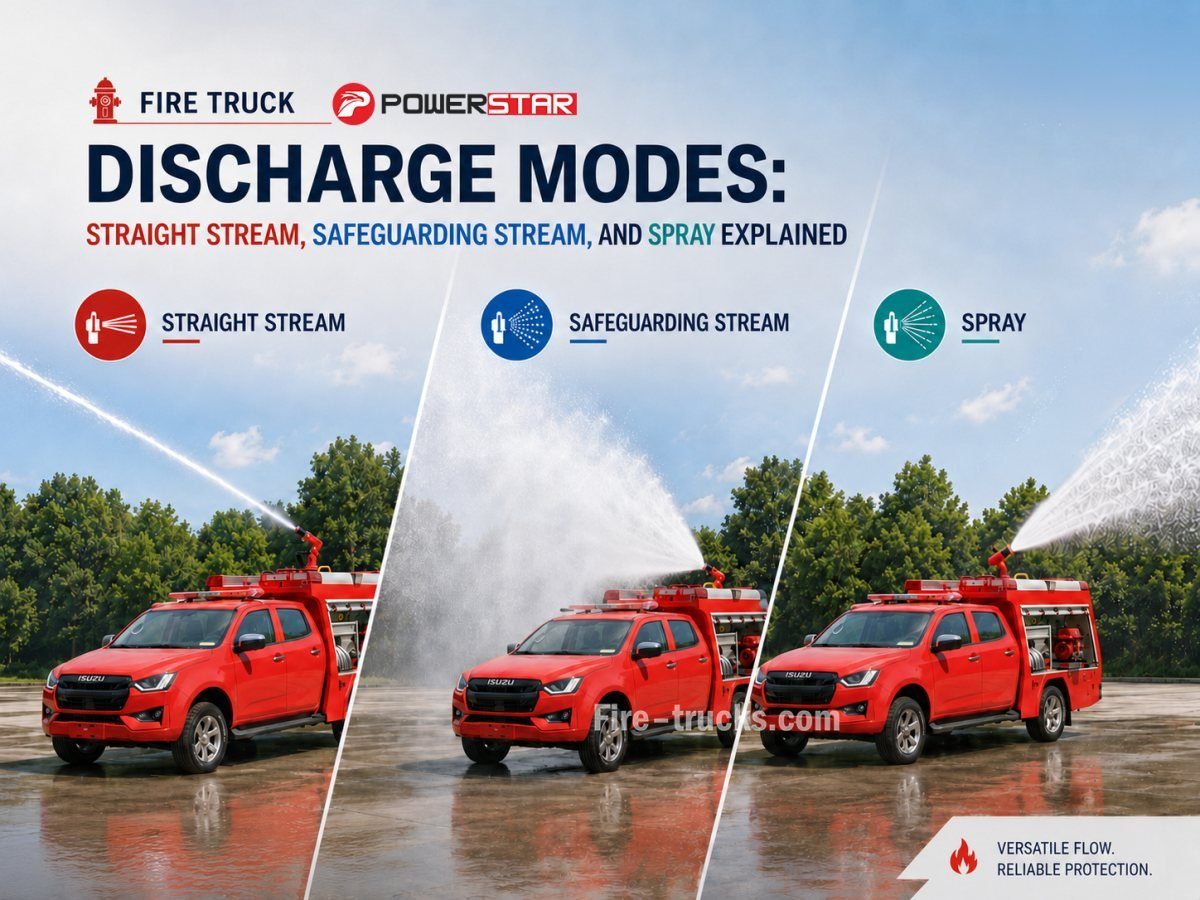
При проведении пожаротушения выбор режима подачи напрямую определяет эффективность тушения, оперативную безопасность и результативность контроля пожара. Большинство людей не знают, что пожарные автомобили насадки могут переключаться между тремя основными режимами подачи: прямой струёй, распылённой струёй и защитной струёй. Различные режимы значительно отличаются по форме потока, дальности, силе воздействия и площади покрытия, и каждый из них соответствует совершенно разным сценариям применения при пожаре. Эта статья, основанная на профессиональных стандартах проведения пожарных операций, всесторонне анализирует принципы, ключевые характеристики и применимые сценарии трёх режимов подачи, помогая нашим клиентам систематически освоить методы работы с подачей воды из пожарных автомобилей. I. Почему пожарным автомобилям нужны разные режимы подачи? Прямая струя, распылённая струя и защитная струя соответствуют трём различным механизмам тушения: тушение ударным воздействием, удушение за счёт испарения и защита от теплового излучения. Пожарные должны гибко переключаться между ними в зависимости от условий на месте происшествия. Итак, почему нельзя всегда использовать только один тип струи? 1. Разнообразие типов пожаров требует различных форм огнетушащих средств Различные типы пожаров имеют разные характеристики горения, что определяет подходящий метод тушения: • Пожары твёрдых материалов класса A требуют ударного воздействия прямой струи для разрушения горящих материалов и проникновения внутрь для охлаждения; • Пожары жидкостей класса B нельзя тушить ударом прямой струи (это вызывает разбрызгивание и распространение огня), вместо этого следует использовать защитную или распылённую струю для покрытия и разбавления; • Пожары электроустановок под напряжением класса E можно тушить только распылённой струёй, поскольку мелкие капли воды не образуют непрерывного проводящего пути; • Пожары в замкнутых пространствах требуют использования распылённой струи для заполнения всего пространства, достигая тушения за счёт поглощения тепла при испарении и удушения. Ни один отдельный режим не может подходить для всех типов пожаров. 2. Разные стадии одного и того же пожара требуют разных тактических подходов Даже для одного и того же пожара разные стадии требуют разных режимов подачи: • На начальной стадии при интенсивном горении необходима прямая струя для дальнего воздействия на очаг пожара и быстрого подавления; • Во время продвижения необходима защитная струя для создания водяной завесы, блокирующей тепловое излучение и защищающей персонал; • Перед входом в помещение необходима распылённая струя для охлаждения и разбавления дыма и газов, создавая условия для атаки внутри помещения. Один режим не может покрыть все операционные потребности на протяжении всего процесса пожаротушения. 3. Дальность, площадь покрытия и эффективность охлаждения невозможно достичь одновременно Три режима имеют собственные преимущества и недостатки по трём ключевым параметрам: • Прямая струя име...
Подробности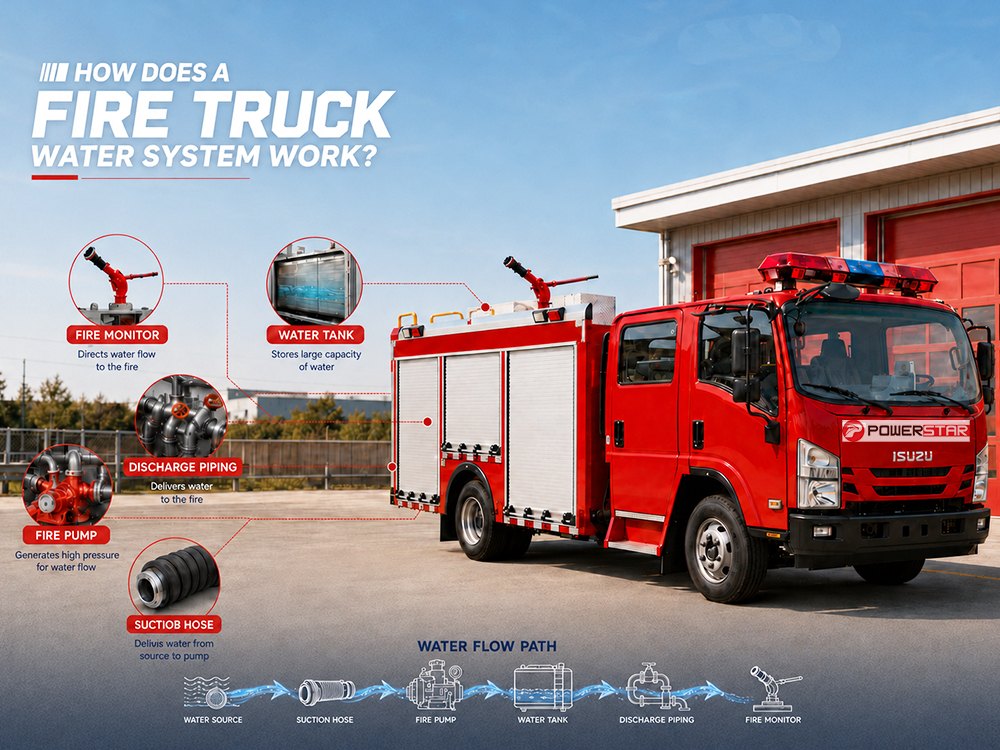
Система водопроводных коммуникаций пожарного автомобиля является ядром каждой пожарной операции. Она точно направляет воду из бака или внешнего источника через насос, клапаны и трубопроводы, обеспечивая подачу воды высокого давления или пены к месту пожара — будь то пожар в высотном здании в плотной городской застройке или возгорание резервуара для хранения нефтехимических продуктов в промышленной зоне. пожарный автомобиль Система водопроводных коммуникаций состоит из множества компонентов, работающих вместе: пожарный насос, водяной бак, всасывающий рукав, напорный трубопровод, клапаны, разветвляющий переходник, сборный переходник, сетчатый фильтр, пожарный лафетный ствол, соединительные муфты рукавов и другие элементы. Полный путь движения потока: Водяной бак → Всасывающий рукав → Сетчатый фильтр → Пожарный насос → Система регулирования давления → Напорный коллектор → Клапаны → Разветвляющий переходник → Пожарный лафетный ствол / Соединительные муфты рукавов → Ствол В этой статье объясняется каждый компонент системы водопроводных коммуникаций и то, как они работают вместе для подачи воды с правильным давлением и расходом. I. Основные компоненты системы водопроводных коммуникаций Водяной бак Хранит запас воды на борту. ● Вместимость: Обычно 2 000–12 000 литров. ● Подача: Подаёт воду к насосу через всасывающий трубопровод. ● Особенности: Противоволновые перегородки для устойчивости автомобиля, сетчатый фильтр для очистки от загрязнений и система заливки для забора воды из природных источников. Пожарный насос Центробежный насос, приводимый в действие двигателем автомобиля через коробку отбора мощности (PTO); одно-/многоступенчатый, из чугуна или бронзы. ● Классы давления: Доступны стандартные характеристики 0,8 МПа, 1,0 МПа, 1,2 МПа и 1,4 МПа, соответствующие типичным требованиям пожаротушения. ● Расходы: От 1 200 до 6 000 л/мин, с рабочими характеристиками, оптимизированными как для операций высокого давления, так и для подачи больших объёмов воды. Клапаны и трубопроводы Сеть труб и клапанов, которая контролирует направление и объём потока воды. ● Впускной клапан: Соединяет насос с внешними источниками воды (гидрантом или точкой забора воды) ● Клапан бака-насоса: Позволяет насосу забирать воду непосредственно из встроенного бака ● Напорные клапаны: Регулируют подачу воды к рукавам и стволам II. Принцип работы системы водопроводных коммуникаций пожарного автомобиля Шаг 1: Забор воды и заливка насоса Вода поступает в систему из встроенного бака, пожарного гидранта или природных источников воды (озёр, рек, прудов). При заборе воды из природных источников система заливки (вакуумный насос) удаляет воздух из всасывающего рукава, создавая вакуум, который позволяет атмосферному давлению протолкнуть воду в насос. Сетчатый фильтр задерживает загрязнения для защиты насоса, а обратный клапан предотвращает обратный поток. Шаг 2: Создание давления насосом Центробежный насос приводится в действие двигателем грузовика через коробку отбора мощности (PTO). После з...
Подробности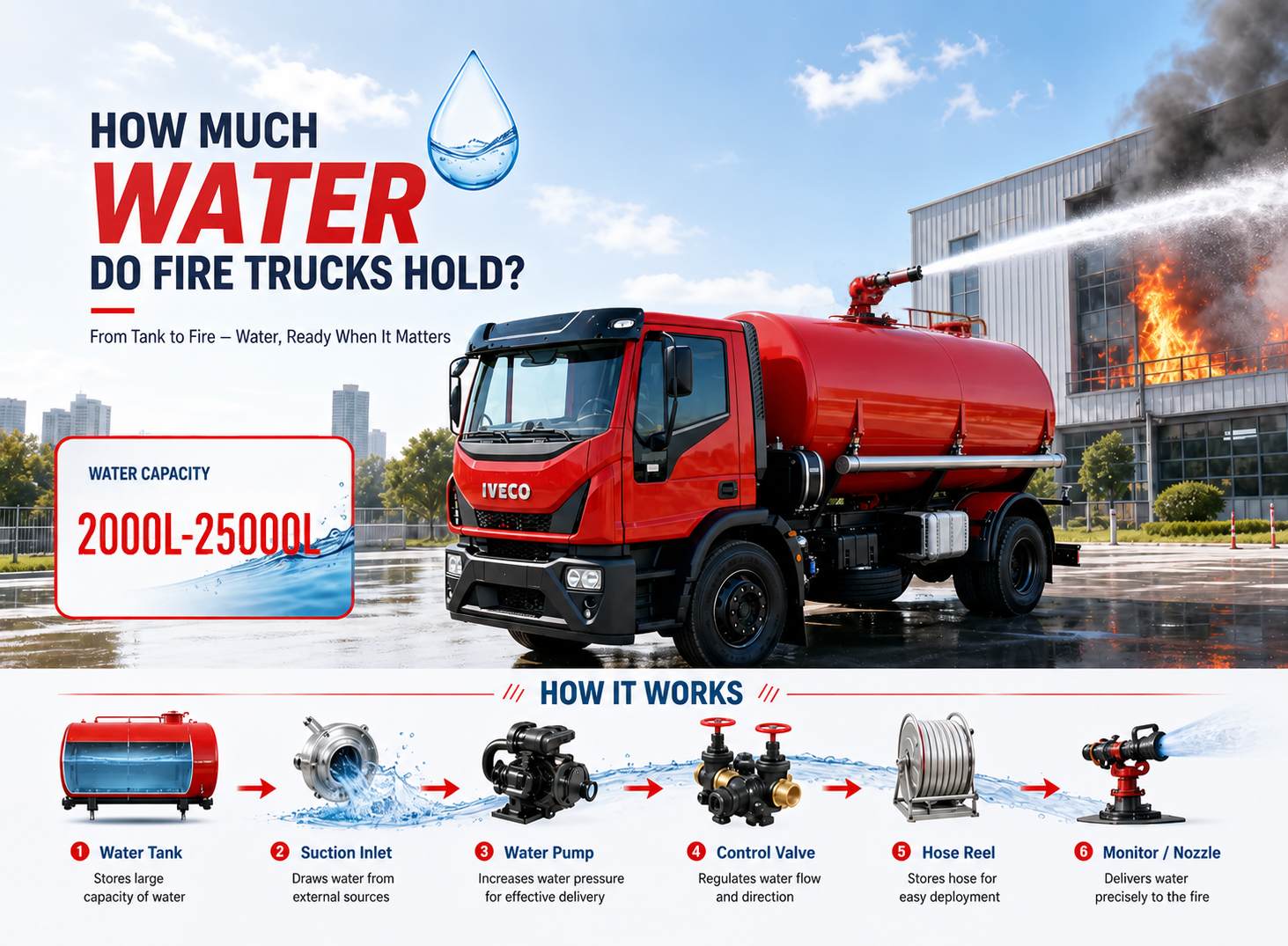
Сколько воды может перевозить пожарная машина? Это один из первых вопросов, с которым сталкиваются наши клиенты при выборе пожарной машины. Не существует единого фиксированного числа — оно зависит от типа автомобиля, грузоподъемности шасси, назначения конструкции и региональных норм, варьируясь от легких моделей объемом 2 000 литров до промышленных пожарных машин с емкостью 25 000 литров. Но больший бак не всегда означает более высокую производительность;пожарная машина вместимость водяного бака должна быть правильно согласована с производительностью насоса, расходом подачи лафетного ствола и грузоподъемностью шасси для обеспечения эффективного тушения пожаров. Эта статья начинается с основ вместимости водяных баков пожарных машин, анализирует типичные диапазоны хранения воды для различных типов автомобилей, рассматривает ключевые факторы, влияющие на конструкцию баков, и предоставляет практические рекомендации по покупке. Ключевые выводы: Вместимость водяного бака пожарной машины обычно составляет от 2 000 до 25 000 литров Разные типы пожарных машин имеют разную вместимость баков Больший бак не означает более высокую эффективность тушения пожара Вместимость бака должна соответствовать производительности насоса, расходу лафетного ствола и грузоподъемности шасси Для промышленного пожаротушения обычно требуются большие баки, тогда как муниципальное пожаротушение уделяет приоритет маневренности » I. Три основных типа водяных баков пожарных машин Насосные пожарные автомобили:Это наиболее распространенные муниципальные пожарные машины. Они в основном используют пожарные гидранты для подачи воды и перевозят примерно 1 900–3 800 литров воды на борту для первоначальной атаки. Основой этих автомобилей является насос, а не бак — они предназначены для подачи воды под давлением после подключения к гидранту. Автоцистерны (водовозы):Эти автомобили предназначены для перевозки больших объемов воды, при этом вместимость баков обычно превышает 11 400 литров. Они играют важную роль в сельских и удаленных районах, где нет пожарных гидрантов, доставляя воду от источников к месту пожара для использования насосными автомобилями. Насосно-цистерные пожарные автомобили:Эти автомобили объединяют функции перекачки и транспортировки воды в одном агрегате. Они могут как подавать воду для тушения пожара, так и снабжать другие автомобили. Вместимость баков обычно составляет от 5 700 до 11 400 литров, что делает их универсальным решением для пожарных служб. » II. Сколько воды могут перевозить разные типы пожарных машин? Тип пожарной машины Типичная вместимость бака Основное применение Легкая пожарная машина 2 000–3 000 л Быстрое реагирование в городе, первоначальная атака Муниципальный насосный пожарный автомобиль 3 000–6 000 л Муниципальное пожаротушение, пожары в зданиях Средний насосный пожарный автомобиль 6 000–10 000 л Комбинированные городские и промышленные задачи Тяжелый насосный пожарный автомобиль 10 000–15 000 л Продолжительные операции, реагирование на больших рассто...
Подробности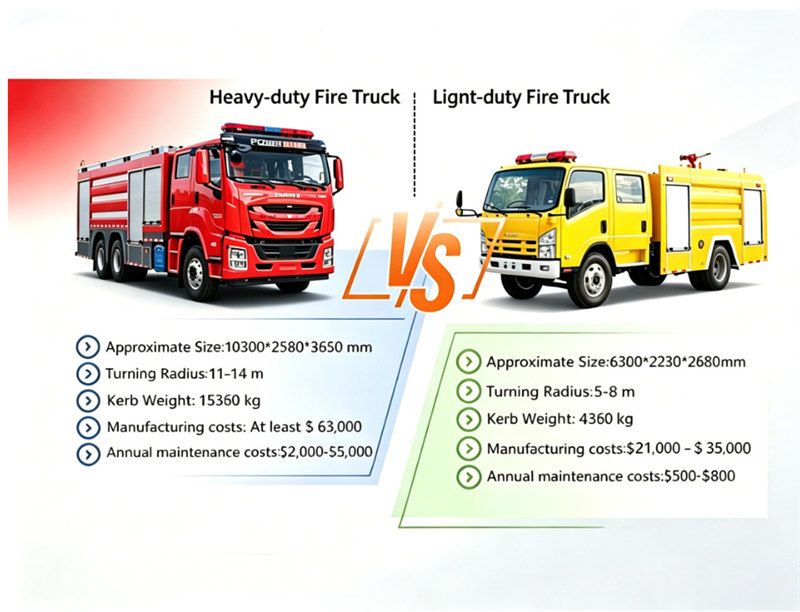
Пожарная спасательная машинаПотребности значительно различаются между мегаполисами и сельскими или небольшими городскими сообществами. Крупные городские пожарные службы используют тяжелые пожарные автомобили с огромными водяными баками, высотными лестницами и полными промышленными комплектациями для тушения пожаров в высотных зданиях, промышленных возгораний и масштабных чрезвычайных ситуаций. Однако для небольших городов, сельских поселков, деревенских пожарных станций и добровольных пожарных подразделений тяжелые пожарные машины часто становятся скорее обузой, чем преимуществом. Именно поэтому легкие пожарные машины стали основным и наиболее практичным решением для небольших городских и сельских пожарных служб по всему миру. Сочетая компактные размеры, гибкую мобильность, полный набор базовых спасательных функций и низкие общие затраты, они идеально соответствуют ежедневным потребностям в спасательных операциях и предотвращении пожаров для местных пожарных команд. Легкая пожарная машина — это компактный легкий аварийно-спасательный автомобиль, специально разработанный для сельских, пригородных и местных пожарных сценариев. I. Сравнение тяжелых пожарных автомобилей и легких пожарных автомобилей: Чтобы четко рассмотретьразницу между тяжелыми и легкими пожарными автомобилями, мы подготовили прямую сравнительную таблицу, охватывающую основные практические показатели. Тяжелые модели имеют длину более 10 метров, радиус разворота 11–14 м и снаряженную массу 15 тонн, их стоимость начинается от 63 000 долларов США, а ежегодное обслуживание составляет 2 000–5 000 долларов США. В отличие от них, компактные легкие пожарные машины почти вдвое меньше по габаритам, весят всего 4 360 кг, стоят от 21 000 долларов США и требуют менее 800 долларов США ежегодного обслуживания, обеспечивая значительно лучшую мобильность и экономичность для сельских и небольших городских пожарных станций. Ⅱ.Ключевые особенности легких пожарных машин: 1.Легкая, но высоконагруженная конструкция. Полная масса автомобиля остается ниже 8 000 кг даже при полной загрузке, что обеспечивает сверхбыстрое реагирование на чрезвычайные ситуации. 2.Доступна индивидуальная настройка полного привода для преодоления сложных и неровных дорожных покрытий, характерных для удаленных регионов. 3.Полный спектр противопожарных функций полностью сохранен: a. Два независимых бака для воды и пены для тушения пожаров. b. Двухрядная кабина экипажа для размещения полной команды пожарных. c. Полный стандартный комплект аварийно-спасательных противопожарных инструментов. d. Дополнительные опции, включая системы освещения места происшествия и буксировочное оборудование. 4.Система отбора мощности (PTO) является основным приводом рабочих операций. Она оснащена интуитивно понятным управлением, простым обслуживанием и легкой заменой компонентов. Надежные основные компоненты значительно снижают долгосрочные эксплуатационные расходы при аварийных операциях для сельских и муниципальных пожарных под...
Подробности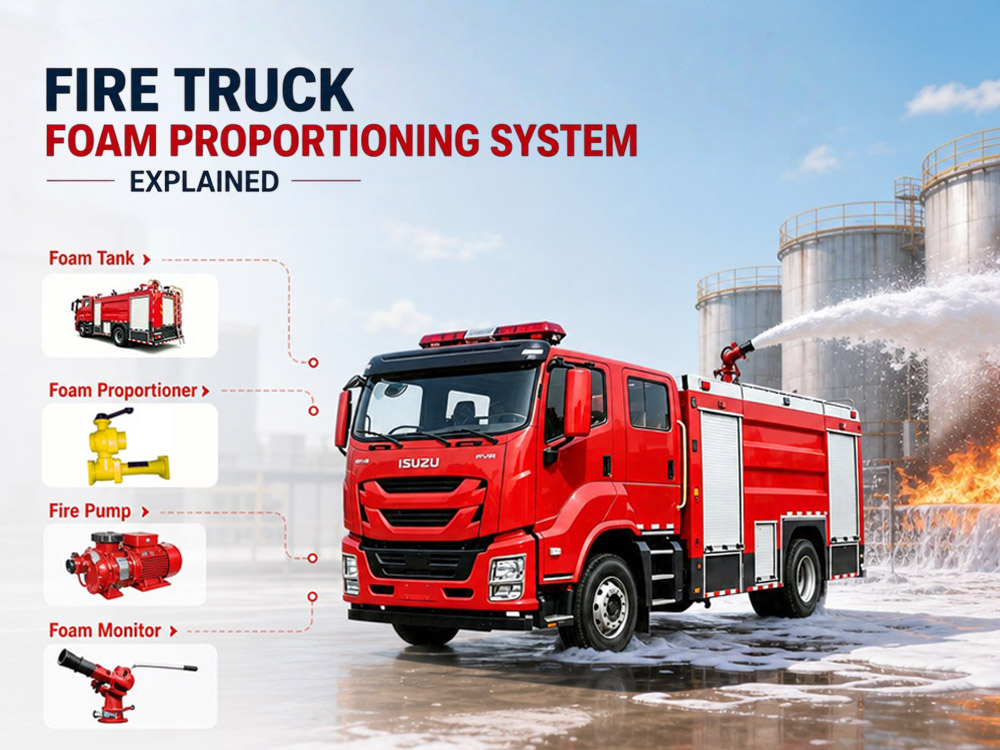
Пенная система пожарного автомобиля смешивает воду с пенообразователем в точных пропорциях (1%, 3% или 6%) для создания пенного раствора. Затем этот раствор нагнетается пожарным насосом и расширяется с помощью воздуха через пеногенерирующие насадки — это основной принцип работы того, как пожарная машина с пенным оборудованием смешивает пену и воду — в конечном итоге образуя стабильный слой пены, который покрывает поверхность горючего материала. Этот процесс повышает эффективность пожаротушения более чем на 50%, одновременно снижая расход пенообразователя на 30%. » I. Почему пожарному автомобилю нужна пенная система? По сравнению с использованием только воды пена имеет три ключевых преимущества: 1. Изоляция кислорода— Пена покрывает горящую поверхность, образуя плотный физический барьер, который препятствует поступлению кислорода в зону горения, тем самым подавляя пожар. 2. Снижение температуры— Содержащаяся в пенном растворе вода поглощает большое количество тепла при испарении, быстро снижая температуру горящей области. 3. Предотвращение повторного возгорания— Слой пены продолжает покрывать зону пожара даже после тушения, эффективно изолируя кислород и горючие пары, значительно снижая риск повторного возгорания. » II. Основные принципы работы пенной системы 1. Система дозирования:Вода проходит через дозатор → создаёт отрицательное давление (система с отрицательным давлением) или использует пенный насос (система с положительным давлением) → забирает пенообразователь из пенобака → смешивается в заданной пропорции (1%, 3% или 6%) → пенный раствор поступает к насосу. 2. Нагнетание насосом:Пенный раствор поступает в центробежный насос → нагнетается до давления 0,8–1,2 МПа → подаётся по трубопроводу к выпускным отверстиям или пенному лафетному стволу. 3. Расширение пены:Пенный раствор под давлением проходит через пенную насадку или устройство аэрации → захватывается воздух → раствор расширяется в готовую пену → покрывает поверхность горючего материала → перекрывает доступ кислорода и подавляет пожар. Ключевая концепция:Пенообразователь + вода не равны готовой пене. Смешанный пенный раствор всё ещё является жидкостью — он должен быть соединён с воздухом через пенную насадку, чтобы стать настоящей противопожарной пеной. Когда пенный раствор высокого давления проходит через насадку с высокой скоростью, он создаёт локальную зону отрицательного давления, которая принудительно втягивает воздух. Воздух и жидкость сталкиваются и интенсивно срезаются внутри насадки, мгновенно распадаясь на миллионы мелких пузырьков, которые накапливаются и образуют белую пену. » III. Как пожарный автомобиль смешивает пену и воду? Процесс смешивания пены на пожарном автомобиле состоит из четырёх основных этапов — от подачи воды до окончательного образования пены. Этап 1: Пожарный насос обеспечивает поток воды После запуска пожарного автомобиля пожарный насос обеспечивает питание пенной системы. Источниками воды могут быть встроенный бак, пожарный гидрант, реки, озёра или резерв...
Подробности
Пожалуйста, читайте дальше, оставайтесь на связи, подписывайтесь, и мы будем рады узнать ваше мнение.

 Specated Ipv6 Network

 русский
 English
 français
 Deutsch
 italiano
 español
 português
 Nederlands
 العربية
 日本語
日本語 한국의
한국의 Türkçe
 Melayu
 ไทย
ไทย Tiếng Việt
 Indonesia
  中文
中文 қазақ
қазақ Filipino
 မြန်မာ
 српски