Оставить сообщение
Если вас заинтересовала наша продукция и вы хотите узнать больше подробностей, пожалуйста, оставьте сообщение здесь, мы ответим вам как можно скорее.

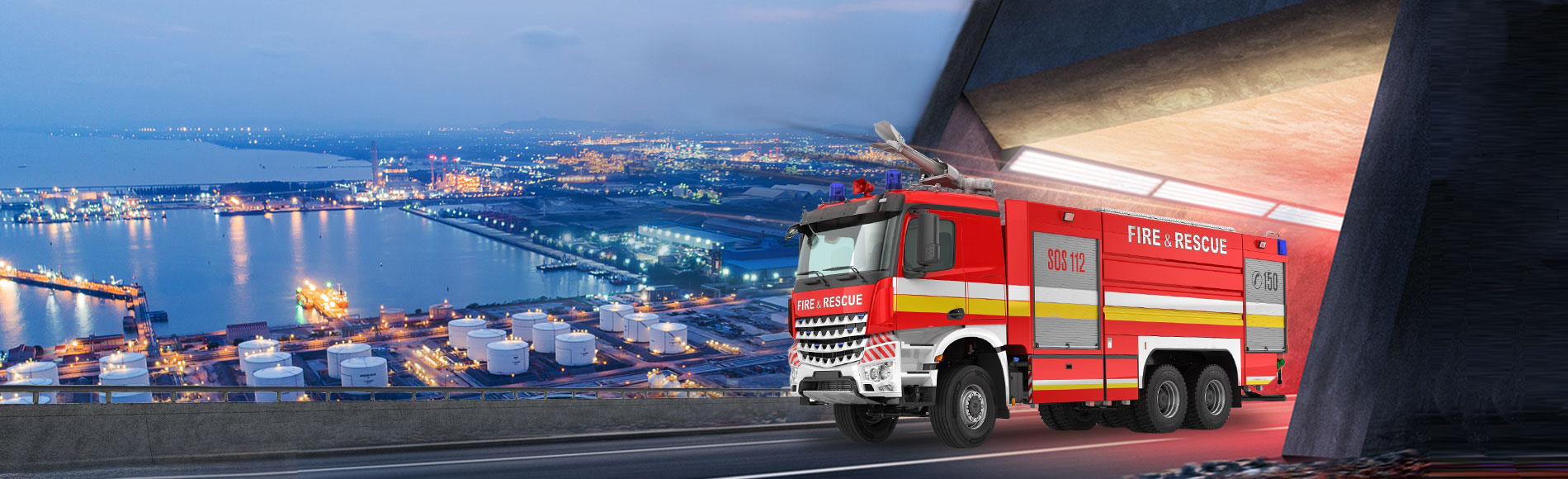
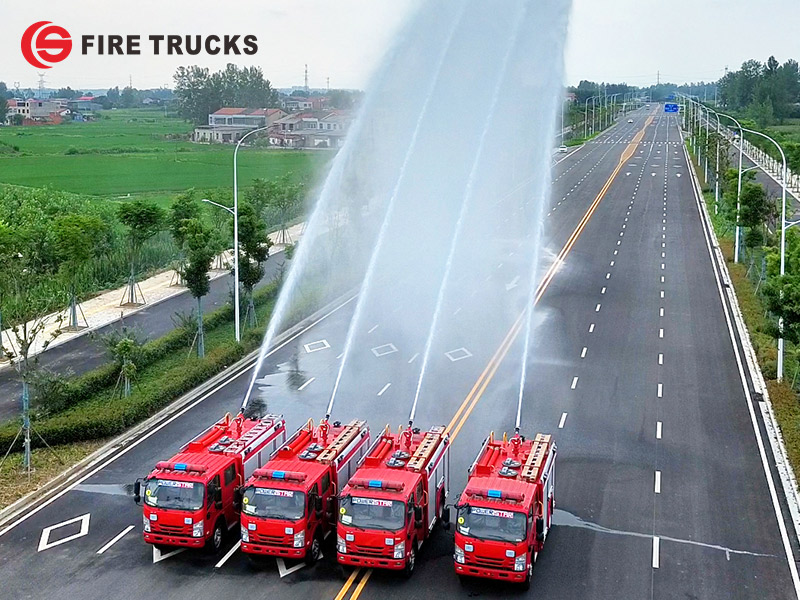
Насосно-распылительная система пожарного автомобиля является основой противопожарных операций. Она выполняет роль «мощной руки» пожарного автомобиля. Преобразуя мощность двигателя в давление (от 0,8 до 1,4 МПа), она подаёт огнетушащие вещества на высоту до 85 метров — будь то пожар в высотном здании в густонаселённом центре города или пожар в резервуаре для хранения нефтехимической продукции в промышленной зоне, пожарный автомобиль полагается на эту систему для эффективного тушения пожара.
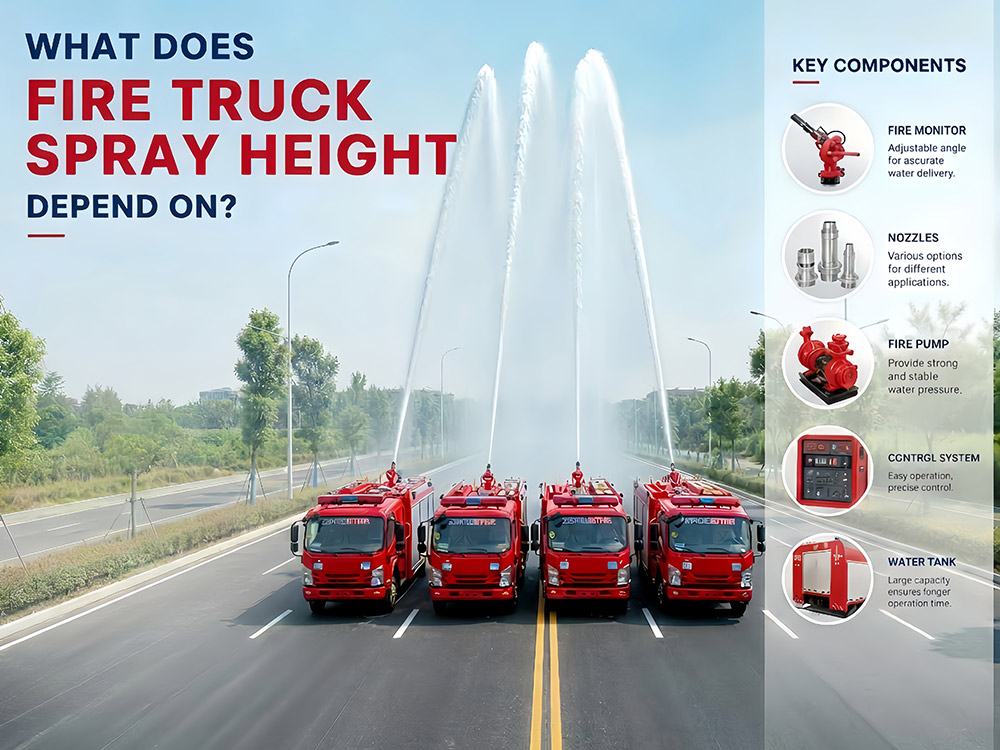
Какие факторы влияют на высоту распыления пожарного автомобиля и как давление насоса, расход и лафетный ствол работают вместе? Это является предметом интереса многих клиентов. Давайте разберёмся в этом сегодня.
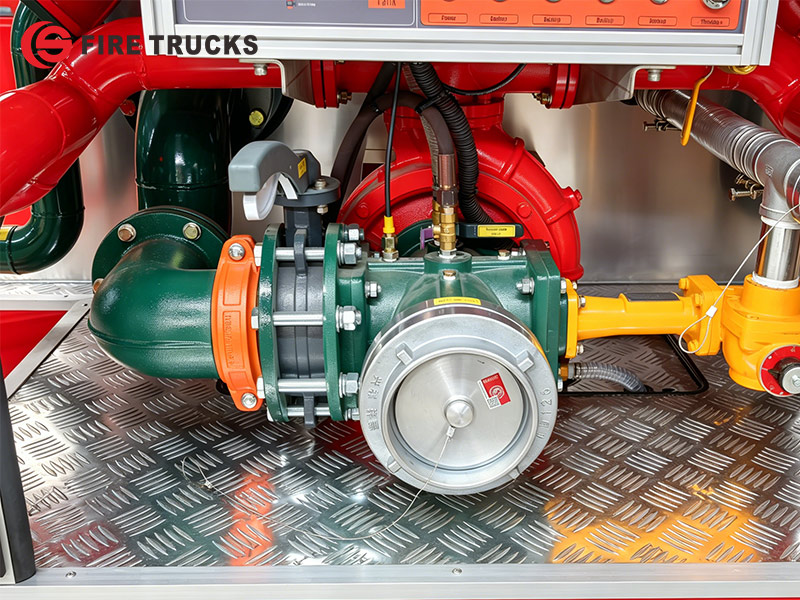
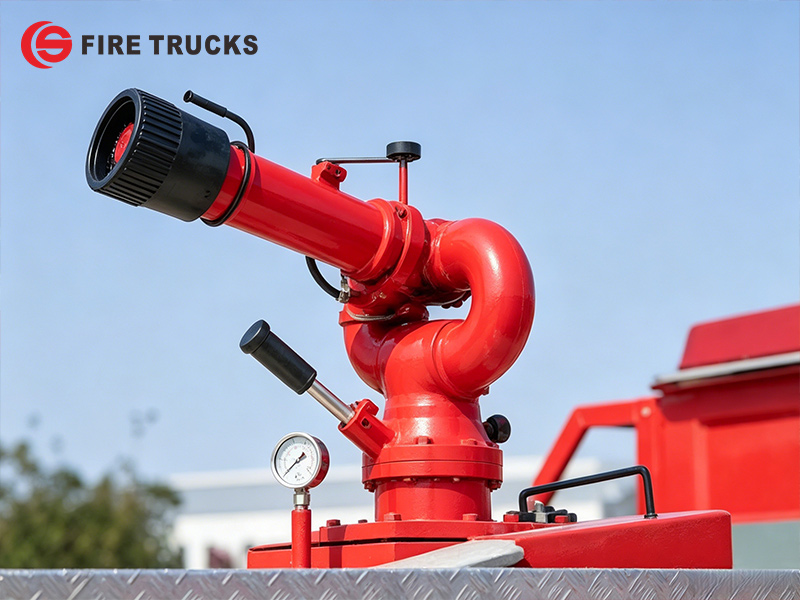
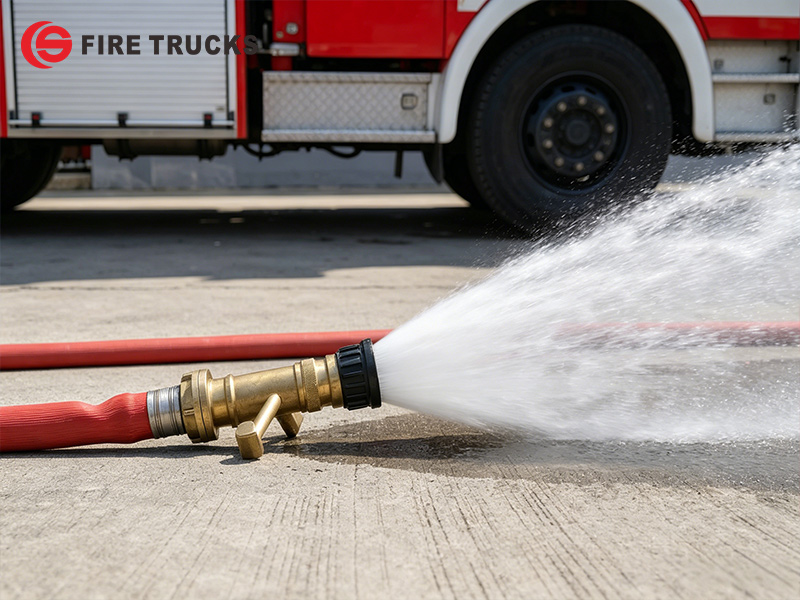
Давление насоса пожарного автомобиля — это сила, создаваемая пожарным насосом для проталкивания огнетушащего вещества через рукава и его выпуска из насадок или лафетных стволов. Оно является главным фактором, определяющим как расход, так и дальность струи. Более высокое давление создаёт большую скорость на выходе из лафетного ствола, напрямую увеличивая высоту распыления. Зависимость определяется формулой H ≈ P/(ρg), где каждое увеличение на 0,1 МПа добавляет примерно 10 метров теоретической высоты — однако реальные потери уменьшают это значение.
В практических операциях пожаротушения применяются следующие диапазоны:
| Давление насоса | Типичная высота распыления |
| 0,8 МПа | 35–45 метров |
| 1,0 МПа | 45–55 метров |
| 1,2 МПа | 55–70 метров |
| 1,4 МПа | 70–85 метров |
Обычно насос представляет собой центробежный насос с приводом от двигателя автомобиля через коробку отбора мощности (КОМ). При вращении рабочего колеса насос всасывает огнетушащее вещество и выбрасывает его наружу под действием центробежной силы, создавая давление, которое перемещает его через систему подачи.
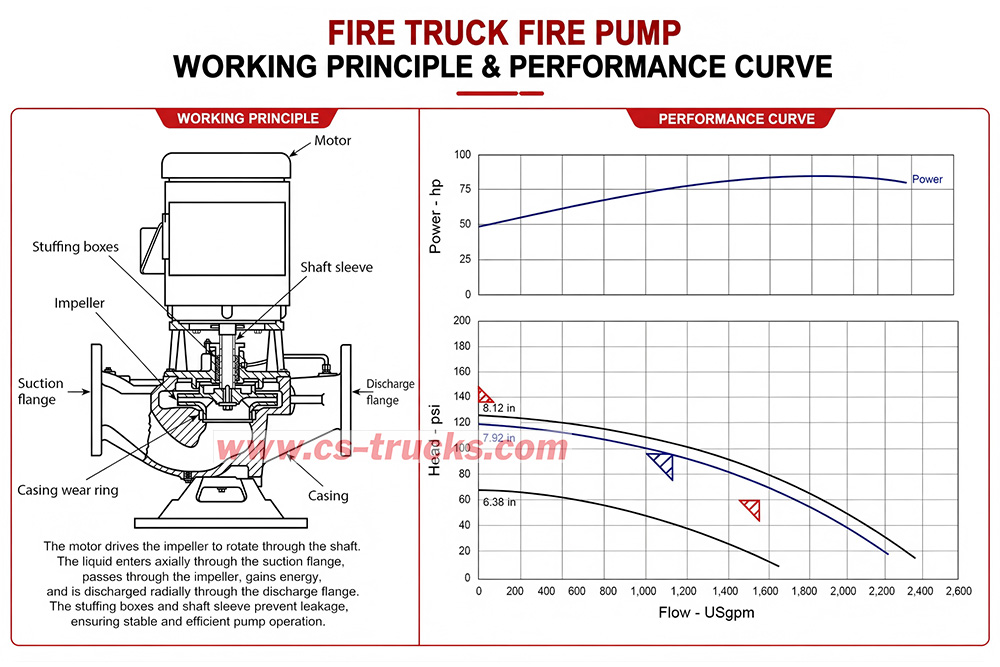 Номинальное давление и рабочее давление:
| Термин | Определение |
| Номинальное давление | Максимальное давление, которое насос может непрерывно поддерживать в расчётных условиях эксплуатации |
| Рабочее давление | Фактическое давление, используемое при тушении пожара, обычно ниже номинального давления для обеспечения запаса |
Достаточный расход так же важен, как и давление. Высокое давление при низком расходе не может обеспечить подачу достаточного количества огнетушащего вещества для подавления пожара. Насосная система должна одновременно поддерживать и давление, и расход.
Зависимость расхода и высоты распыления:
2 000 л/мин → эффективно для городских пожаров
3 000 л/мин → подходит для промышленных парков
4 000 л/мин → требуется для нефтехимических объектов
5 000+ л/мин → необходимо для аварийно-спасательных операций в аэропортах
Внутренний путь потока, диаметр выходного отверстия и тип лафетного ствола напрямую влияют на высоту распыла.
Сравнение типов лафетных стволов:
Водяной лафетный ствол: максимальная высота, прямой путь потока
Пенный лафетный ствол: немного ниже (на 5–10% меньше) из-за турбулентности при подсосе воздуха
Двухцелевой лафетный ствол: средняя высота (компромисс между водой и пеной)
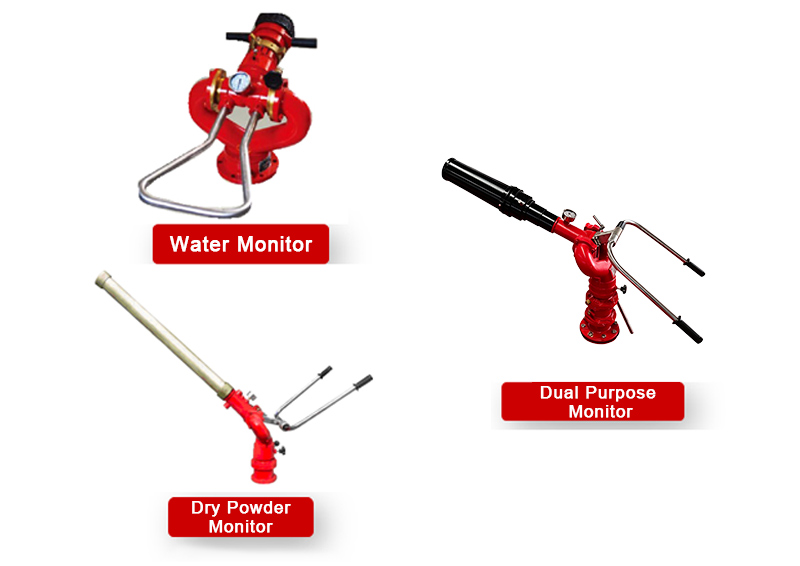
Вода и пена имеют разную плотность. Пенный раствор примерно на 5–10% плотнее воды, что немного снижает высоту распыла при одинаковом давлении. Это следует учитывать при выборе оборудования для пенного тушения.
Когда огнетушащее вещество проходит через рукава и трубопроводы, трение снижает давление на лафетном стволе. Более длинные рукава и меньшие диаметры увеличивают потери.
Факторы потерь на трение:
Длина рукава: больше длина = больше потери
Диаметр рукава: меньше диаметр = больше потери
Соединения и изгибы: каждый элемент добавляет сопротивление
Чтобы предоставить клиентам лучшие решения для пожаротушения, FIRE TRUCKS выбирает наиболее подходящую систему на основе требований применения
:
| Давление насоса | Расход | Высота распыла | Рекомендуемое применение |
| 0,8 МПа | 2 000 л/мин | 35–45 м | Муниципальное пожаротушение |
| 1,0 МПа | 3 000 л/мин | 45–55 м | Промышленные парки |
| 1,2 МПа | 4 000 л/мин | 55–70 м | Нефтехимические объекты |
| 1,4 МПа | 5 000+ л/мин | 70–85 м | Пожаротушение в аэропортах |
| Применение | Рекомендуемый тип лафетного ствола | Причина |
| Муниципальное пожаротушение | Водяной лафетный ствол | Максимальная высота распыла, простота эксплуатации |
| Нефтеперерабатывающий завод/химический завод | Пенный лафетный ствол или комбинированный | Обрабатывает пожары с горючими жидкостями |
| Аварийно-спасательные работы при авиакатастрофах | Пенный лафетный ствол (высокой производительности) | Требуется большой объём пены |
| Смешанные пожарные риски | Комбинированный лафетный ствол | Гибкость для подачи как воды, так и пены |
| Фактор | Влияние | Как оптимизировать |
| Давление насоса | Прямо пропорционально | Выберите подходящее давление для применения |
| Расход жидкости | Обеспечивает подавление пожара | Сбалансируйте давление и расход |
| Конструкция лафетного ствола | Отклонение до 10% | Подберите тип лафетного ствола под применение |
| Тип огнетушащего вещества | Пена немного снижает высоту | Учитывайте разницу в плотности |
| Потери на трение | Снижает эффективное давление | Используйте более короткие/большие рукава |
| Увеличение высоты | Расходует давление | Добавьте давление для увеличения высоты |
| Скорость ветра | Уменьшает эффективную высоту | Расположить пожарный автомобиль с наветренной стороны |
Описание случая:
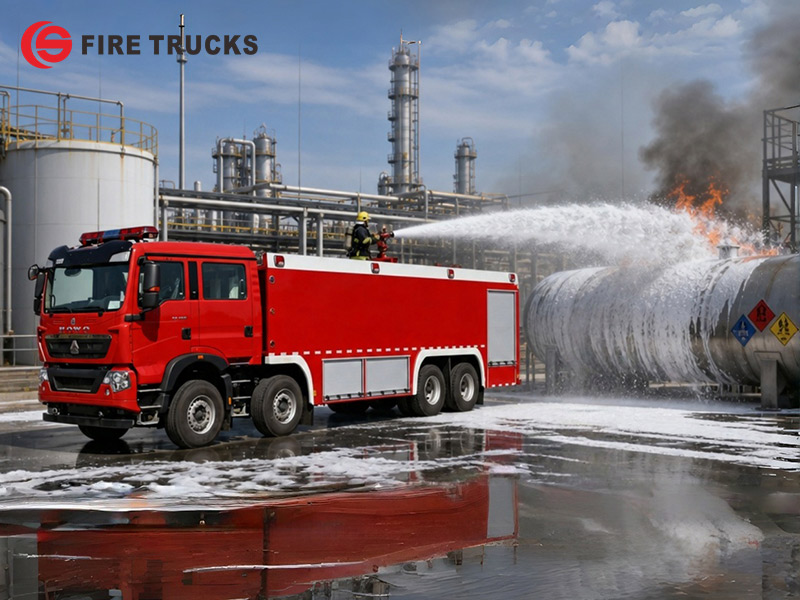
В промышленной зоне на объекте хранения нефтехимической продукции произошел крупный пожар. В пожаре был задействован резервуар с плавающей крышей диаметром 50 метров, содержащий сырую нефть. Наземные рукавные линии не могли достичь очага пожара из-за высоты резервуара и зоны теплового излучения.
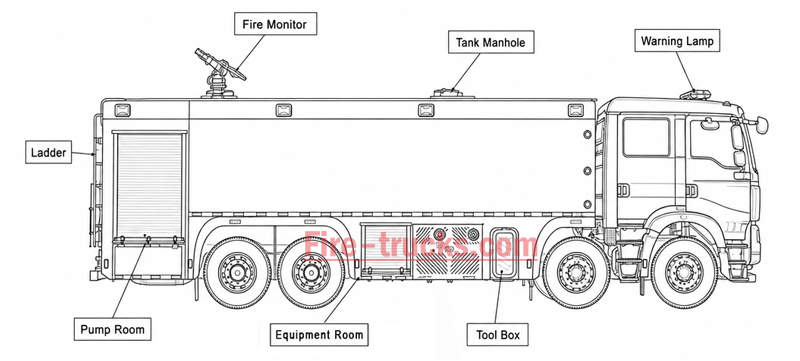
Конфигурация пожарного автомобиля:
Пенный пожарный автомобиль 8×4
Насосная система с номинальным давлением 1,2 МПа / производительностью 4 000 л/мин
Универсальный лафетный ствол PL48 для подачи пены/воды
Фактические характеристики:
Измеренная высота струи: примерно 62 метра
Эффективная зона покрытия: площадь резервуара диаметром примерно 80 метров
Пенный слой успешно подавил пожар в течение 8 минут
Главный вывод:
Для пожаров в крупных резервуарах давления ниже 1,0 МПа часто недостаточно для подачи пены на требуемое расстояние. Сочетание достаточного давления, высокой производительности подачи и правильно выбранного лафетного ствола является необходимым для эффективного тушения пожара.
Заблуждение 1: Более высокое давление всегда лучше
Реальность:Более высокое давление увеличивает энергопотребление, стоимость оборудования и сложность технического обслуживания. Чрезмерное давление также может повредить рукава и насадки. Целью является достаточное давление для выполнения задачи, а не максимальное давление.
Заблуждение 2: Высота струи равна возможностям пожаротушения
Реальность:Расход часто более важен, чем высота струи. Мощная струя с низким расходом может не обеспечить достаточного количества огнетушащего вещества для подавления пожара. Важно совокупное значение давления и расхода.
Заблуждение 3: Потери на трение можно игнорировать
Реальность:При большой длине рукавных линий потери на трение могут поглощать 20–30% давления насоса. Правильный расчет потерь на трение необходим для обеспечения достаточного давления у насадки.
Заблуждение 4: Лафетный ствол не имеет значения
Реальность:Насос высокого давления, подключенный к плохо спроектированному лафетному стволу, не обеспечит максимальную высоту струи. Внутренний путь потока, диаметр выхода и тип лафетного ствола влияют на конечные характеристики. Соответствие лафетного ствола насосу так же важно, как и выбор самого насоса.
В: Какое давление насоса является наиболее распространенным для пожарных автомобилей?
О: Большинство пожарных автомобилей оснащены насосами с давлением в диапазоне от 0,8 до 1,2 МПа, при этом 1,0 МПа является наиболее распространенным стандартом.
В: Какую высоту струи может обеспечить насос с давлением 1,0 МПа?
О: В стандартных условиях насос с давлением 1,0 МПа может обеспечить высоту струи от 45 до 55 метров при использовании лафетного ствола среднего или большого размера.
В: Почему для тушения пожаров в высотных зданиях требуется более высокое давление насоса?
О: При пожарах в высотных зданиях требуется дополнительное давление для преодоления перепада высоты (1,0 м высоты требует примерно 0,01 МПа) и потерь на трение в вертикальных рукавных линиях.
В: Обеспечивает ли пенный лафетный ствол такую же высоту струи, как водяной лафетный ствол?
A: Обычно пенные лафетные стволы достигают немного меньшей высоты (на 5–10% меньше), чем водяные лафетные стволы при том же давлении, из-за конструкции воздухозабора, создающей турбулентность, и более высокой плотности пенного раствора.
Q: Какой фактор является самым важным для высоты струи?
A: Ни один отдельный фактор не определяет высоту струи. Давление насоса, расход, конструкция лафетного ствола, тип насадки и условия окружающей среды работают вместе. Хорошо сбалансированная система эффективнее, чем система, превосходящая только в одной области.
Q: Влияет ли сам лафетный ствол на высоту струи?
A: Да. Внутренний путь потока, диаметр выхода и тип лафетного ствола (водяной, пенный или двойного назначения) напрямую влияют на высоту струи. Хорошо спроектированный лафетный ствол максимально использует энергию, передаваемую насосом.
Высота струи зависит от множества факторов — давления насоса, расхода, конструкции лафетного ствола, типа огнетушащего вещества, потерь на трение, высоты и условий ветра
1.0–1.2 MPa является основным диапазоном давления для большинства промышленных применений пожаротушения
Выбор лафетного ствола имеет значение — насос высокого давления с плохо спроектированным лафетным стволом не обеспечит максимальную высоту струи
Расход так же важен, как и давление — высокое давление при низком расходе может не обеспечить достаточное количество огнетушащего вещества для подавления пожара
Разные огнетушащие вещества имеют разные характеристики струи — пена более плотная и достигает немного меньшей высоты
Нефтехимические и аэропортовые проекты обычно требуют 1.2 MPa или выше
Для международных проектов отдавайте приоритет пожарным автомобилям, соответствующим признанным стандартам, таким как NFPA, EN или GB
Высота струи пожарного автомобиля не определяется одним фактором. Она зависит от совокупного воздействия давления насоса, расхода, конструкции лафетного ствола, типа огнетушащего вещества, потерь на трение, увеличения высоты и условий ветра.


Вас может быть заинтересован в следующей информации
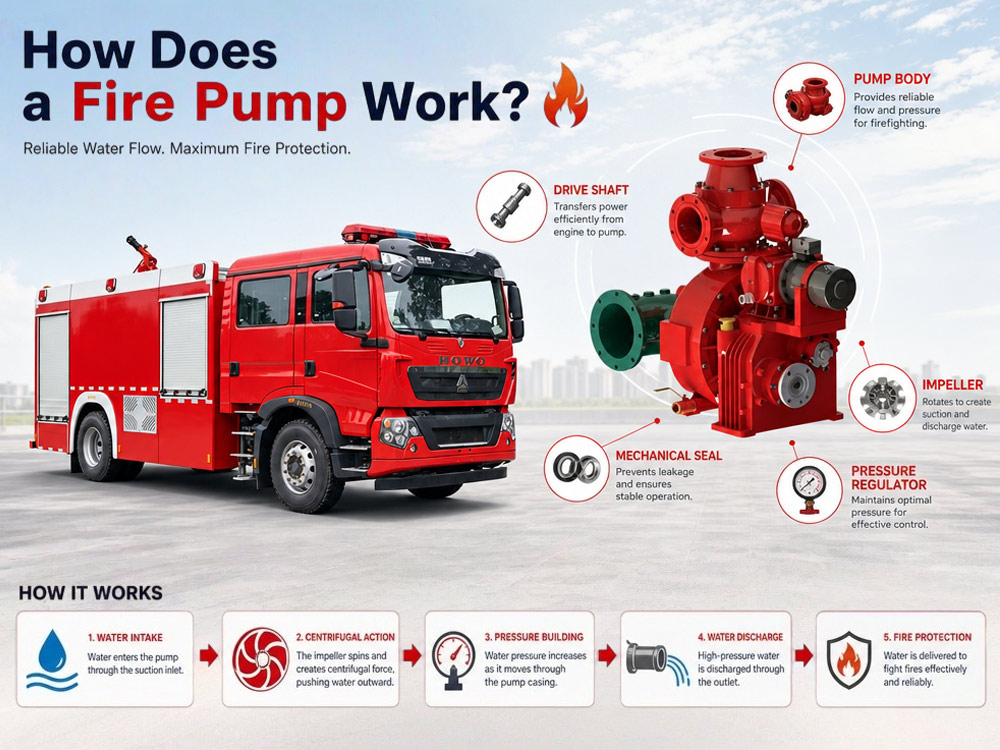
Пожарный насос является сердцем системы подачи воды каждого пожарного автомобиля. Независимо от того, используется ли он при тушении пожара в здании, промышленной аварии, происшествии в аэропорту или операции в природной зоне, пожарный насос на пожарном автомобиле отвечает за подачу воды высокого давления к рукавам, лафетным стволам и системам пенообразования.Его конструкция с центробежным рабочим колесом и система с приводом от ВОМ обеспечивают стабильное давление и высокую производительность потока, напрямую повышая эффективность тушения пожаров более чем на 40% и сокращая время реагирования в 3 раза. Его можно назвать невидимым защитником пожарных операций и техническим краеугольным камнем современных аварийно-спасательных служб. Узнайте, как работает пожарный насос, включая принцип его работы, основные компоненты, процесс движения воды, создание давления и области применения. Узнайте, как насосы пожарных автомобилей обеспечивают надежную подачу воды для тушения пожаров и как выбрать подходящий насос для вашей пожарной техники.Давайте узнаем об этом сегодня. » I. Сначала необходимо знать три ключевых компонента системы пожарного насоса: 1. Рабочее колесо: Вращающийся компонент, который втягивает воду и выбрасывает ее наружу под действием центробежной силы. Обычно изготавливается из бронзы, нержавеющей стали или чугуна. 2. Корпус насоса: Корпус, в котором находится рабочее колесо и который направляет поток воды. Предназначен для преобразования скорости в давление. 3. Коробка отбора мощности (PTO): Механическое соединение, передающее мощность двигателя от трансмиссии автомобиля к пожарному насосу. » II. После ознакомления с ключевыми компонентами основной принцип работы пожарного насоса выглядит следующим образом: 1. Мощность передается от двигателя через PTO Двигатель автомобиля приводит в действие PTO, который соединен с валом насоса. Когда оператор включает PTO, мощность двигателя перенаправляется для вращения рабочего колеса насоса с высокой скоростью. 2. Рабочее колесо начинает вращаться Рабочее колесо вращается со скоростью 1 500–2 500 об/мин, втягивая воду в насос через всасывающий вход. Вращающиеся лопасти рабочего колеса создают зону низкого давления в центре, втягивая воду из встроенного бака, гидранта или естественного источника воды. 3. Центробежная сила повышает давление воды При вращении рабочего колеса вода выбрасывается наружу под действием центробежной силы. Скорость воды увеличивается по мере ее перемещения от центра к внешнему краю рабочего колеса. Затем корпус насоса преобразует эту скорость в давление, выталкивая воду высокого давления через напорное отверстие. 4. Вода высокого давления выходит через напорное отверстие Вода под давлением (обычно 0,8–1,2 МПа) выходит через напорное отверстие и подается к пожарным рукавам, лафетным стволам или системам дозирования пены для проведения пожаротушения. » III. Откуда пожарный насос получает воду? Пожарный насос может забирать воду из трех источников: Встроенный водяной бак: Основно...
Подробности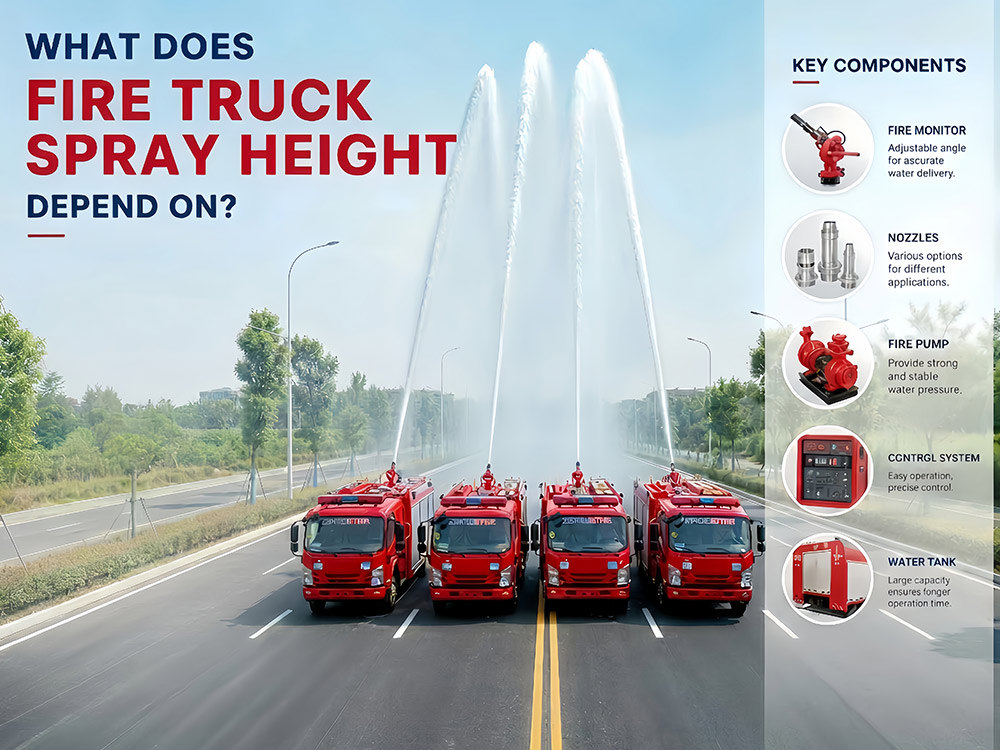
Насосно-распылительная система пожарного автомобиля является основой противопожарных операций. Она выполняет роль «мощной руки» пожарного автомобиля. Преобразуя мощность двигателя в давление (от 0,8 до 1,4 МПа), она подаёт огнетушащие вещества на высоту до 85 метров — будь то пожар в высотном здании в густонаселённом центре города или пожар в резервуаре для хранения нефтехимической продукции в промышленной зоне, пожарный автомобиль полагается на эту систему для эффективного тушения пожара. Какие факторы влияют на высоту распыления пожарного автомобиля и как давление насоса, расход и лафетный ствол работают вместе? Это является предметом интереса многих клиентов. Давайте разберёмся в этом сегодня. » I. Три ключевых компонента, определяющих высоту распыления 1. Насосная система пожарного автомобиля: Сердце пожарного автомобиля. Центробежный насос с приводом от КОМ. Распространённые значения давления: 0,8 МПа, 1,0 МПа, 1,2 МПа, 1,4 МПа. Расход от 2 000 до более чем 5 000 л/мин. 2. Лафетный ствол: Последний компонент перед выходом огнетушащего вещества из автомобиля. Доступны водяные лафетные стволы, пенные лафетные стволы и комбинированные лафетные стволы. Серия PL (PL48) с расходом до 4 000 л/мин и высотой распыления более 70 метров. 3. Система подачи: Трубопроводы, рукава и насадки, которые переносят огнетушащее вещество от насоса к лафетному стволу. Диаметр и длина рукава, а также тип насадки влияют на конечную высоту распыления. » II. Основные факторы, определяющие высоту распыления 1.1. Давление насоса Давление насоса пожарного автомобиля — это сила, создаваемая пожарным насосом для проталкивания огнетушащего вещества через рукава и его выпуска из насадок или лафетных стволов. Оно является главным фактором, определяющим как расход, так и дальность струи. Более высокое давление создаёт большую скорость на выходе из лафетного ствола, напрямую увеличивая высоту распыления. Зависимость определяется формулой H ≈ P/(ρg), где каждое увеличение на 0,1 МПа добавляет примерно 10 метров теоретической высоты — однако реальные потери уменьшают это значение. В практических операциях пожаротушения применяются следующие диапазоны: Давление насоса Типичная высота распыления 0,8 МПа 35–45 метров 1,0 МПа 45–55 метров 1,2 МПа 55–70 метров 1,4 МПа 70–85 метров 1.2. Принцип работы пожарного насоса: Обычно насос представляет собой центробежный насос с приводом от двигателя автомобиля через коробку отбора мощности (КОМ). При вращении рабочего колеса насос всасывает огнетушащее вещество и выбрасывает его наружу под действием центробежной силы, создавая давление, которое перемещает его через систему подачи. Номинальное давление и рабочее давление: Термин Определение Номинальное давление Максимальное давление, которое насос может непрерывно поддерживать в расчётных условиях эксплуатации Рабочее давление Фактическое давление, используемое при тушении пожара, обычно ниже номинального давления для обеспечения запаса 2. Расход (л/мин) Достаточный расход так же важен, как...
Подробности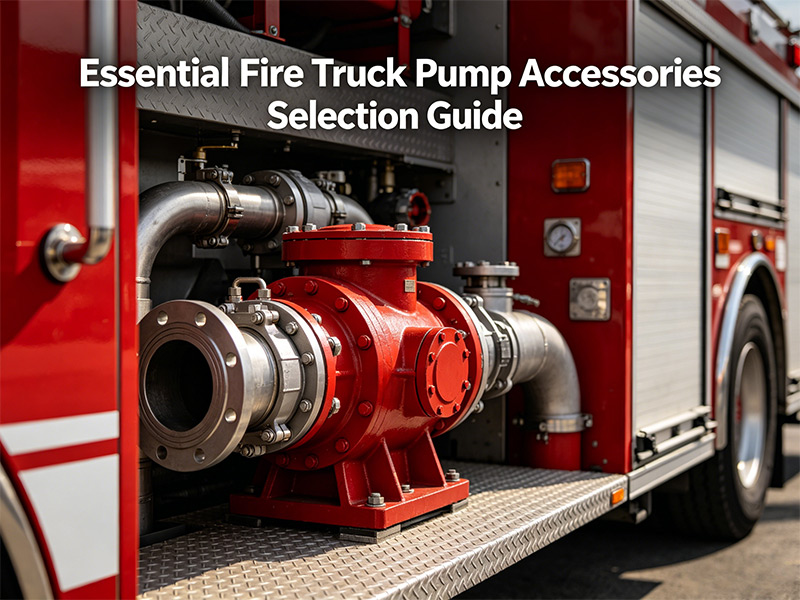
Насосная система пожарной машины настолько надежна, насколько надежны ее компоненты. От забора воды из источника до ее подачи под высоким давлением каждый аксессуар играет важную роль. Это руководство охватывает пожарная машина пять основных категорий аксессуаров: заливочные устройства, шаровые клапаны, запорные клапаны, пенообразователи и гидравлические системы управления. Понимание этих компонентов помогает пожарным обслуживать свое оборудование и выбирать подходящие аксессуары для конкретных применений. I. Серия заливочных устройств (вакуумные заливочные устройства) Заливочные устройства необходимы для забора воды из озер, рек или других статических источников, когда пожарный гидрант недоступен. Они удаляют воздух из насоса и всасывающего шланга, позволяя атмосферному давлению проталкивать воду в насос. Обзор продукта Продукт Максимальный вакуум Напряжение Мощность Подходящий размер насоса 2-поршневое заливочное устройство >85 кПа 24 В - Ниже 100 л/с Электрическое 2-поршневое заливочное устройство >85 кПа 24 В 2,1 кВт Ниже 100 л/с 4-поршневое заливочное устройство >85 кПа 24 В - Выше 100 л/с Электрическое 4-поршневое заливочное устройство >85 кПа 24 В 2,1 кВт Выше 100 л/с Ключевая особенность: электрические заливочные устройства Электрические заливочные устройства имеют значительное преимущество — они могут заполнять насос без вращения насоса. Это защищает механическое уплотнение от повреждений при работе всухую. Когда стандартному заливочному устройству требуется вращение насоса, электрическая версия работает независимо, продлевая срок службы уплотнения. II. Серия шаровых клапанов (управление потоком) Шаровые клапаны регулируют поток воды через шланги и выпускные отверстия. Они разработаны для быстрого включения и выключения с помощью простого поворота на 90°. Шаровые клапаны из нержавеющей стали Модель Материал Номинальное давление Резьба Управление FQS65/2.5 Корпус и шар: нержавеющая сталь 304; Уплотнение: PTFE 2,5 МПа G2-1/2" Маховик / Рычаг FQS80/2.5 Корпус и шар: нержавеющая сталь 304; Уплотнение: PTFE 2,5 МПа G3" Маховик / Рычаг Шаровые краны из алюминиевого сплава (меньший вес) Модель Материал Номинальное давление Резьба Управление FQS65/2.5 Корпус: A356.2; Шар: 304; Уплотнение: PTFE 2,5 МПа G2.5" Маховик / Рычаг FQS80/1.6 Корпус: A356.2; Шар: 304; Уплотнение: PTFE 1,6 МПа G3" Маховик / Рычаг FQS65/2.5 квадратный Корпус: A356.2; Шар: 304; Уплотнение: PTFE 2,5 МПа - Пневматическое управление / Рычаг Ⅲ. Серия шаровых клапанов (регулирование давления и расхода) В отличие от шаровых кранов, предназначенных для работы в режиме открытия/закрытия, запорные клапаны позволяют точно контролировать расход и давление. Они идеально подходят для ситуаций, где требуется постепенная регулировка. Модель Материал Номинальное давление Резьба Управление DN65/2.5 Корпус: A356.2; Шток: H62; Уплотнение: NBR 2.5 МПа G2.5" Маховик DN80/2.5 Корпус: A356.2; Шток: H62; Уплотнение: NBR 2.5 МПа G3" Маховик Когда использовать запо...
Подробности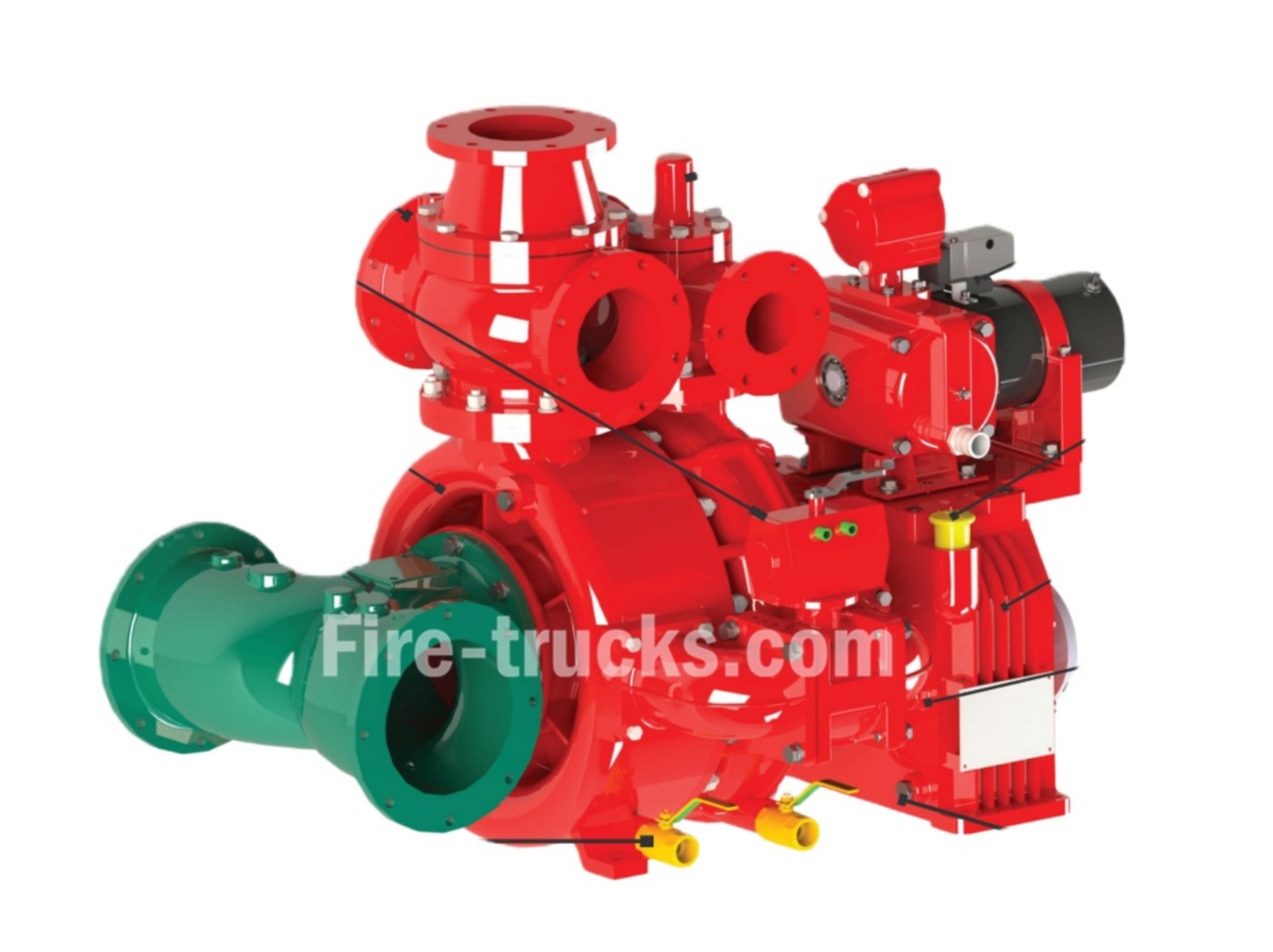
Как профессиональный сюнчжэнь производитель пожарных насосов в Китае, Грузовики Powerstar Компания владеет собственной торговой маркой «Xiongzhen», выпускающей серию продукции, включающую пожарные насосы низкого давления, средне-низкого давления и автомобильные пожарные насосы высокого-низкого давления, а также вспомогательное оборудование, такое как пожарные мониторы и дозаторы пены. В пожарных насосах используются новые материалы, такие как алюминиевый сплав и нержавеющая сталь, они оснащены электромагнитной муфтой с автоматическим отключением и обратным клапаном, что обеспечивает превосходные характеристики, простоту эксплуатации и удобство обслуживания. Продукция компании прошла типовые испытания в Национальном центре контроля качества противопожарного оборудования, сертификацию CCC и сертификацию системы управления качеством ISO9001. В ассортимент пожарных насосов компании Xiongzhen входят в основном следующие модели: CB10/20-XZ. CB10/30-XZ , CB10/40-XZ, CB10/60-XZ CB10/80-XZ, CB10/100-XZ, CB20.10/15.30-XZ, CB20.10/20.40-XZ, CB20.10/30.60-XZ и т. д. Пожарный насос CB10/20-XZ для пожарных машин Пожарные насосы CB10/30-XZ для пожарных машин Пожарные насосы модели CB10/40-XZ для пожарных машин, Китай. Пожарные насосы модели CB10-60 для пожарно-спасательных машин Аварийные пожарные насосы CB10/80-XZ для пожарных машин Пожарные насосы CB10/100-XZ для пожарных автомобилей Технические характеристики системы пожарного насоса Xiongzhen CB10/100-XZ Производители пожарных насосов серии CB компании Xiongzhen Технические характеристики комплектов пожарных насосов CB10/150 Система пожаротушения с насосом CB10/160-XZ, завод Xiongzhen. Технические характеристики аварийных пожарных насосов CB10/170-XZ Компания Powerstar Trucks обладает мощным техническим потенциалом, владеет четырьмя патентами и использует передовое производственное оборудование, такое как системы автоматизированного проектирования (CAD) и станки с ЧПУ, что обеспечивает высокий уровень качества продукции и удовлетворенность клиентов. Ее продукция в основном предназначена для заводов по модификации пожарных машин и пожарных бригад. Технические характеристики пожарного насоса CB20.10 20.40 Пожарный насос CB20.10 30.60-XZ производства завода Xiongzhen. Пожарный насос серии CB20/15-XZ аварийный пожарный насос серии CB20/20-XZ Подробности установки пожарного насоса CB20 25 Вот график технического обслуживания вашего XIONGZHEN. пожарные насосы Сгруппировано по неделям, месяцам, кварталам и годам для удобства: 01. Ежедневная проверка пожарного насоса Powersar: Проверьте давление запуска и остановки, а также частоту работы насоса стабилизации давления. Проверьте мощность пускового аккумулятора пожарного насоса с дизельным двигателем. Проверьте внешний вид регулирующих клапанов подачи воды и узлов сигнальных клапанов на наличие повреждений. 02, Пожарный насос Powersar Еженедельная проверка: Проведите пробный запуск пожарного насоса с автоматическим пуском. Проверьте уровень топлива в пожарном насосе ...
Подробности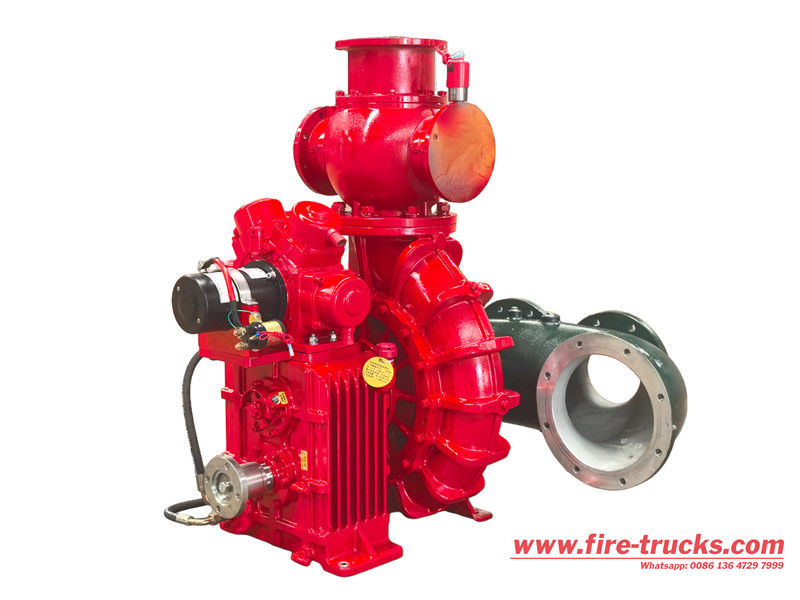
Пенообразующий пожарный насос CB10/140 — это широко используемая система водоснабжения для пожаротушения, устанавливаемая на транспортные средства или стационарная, с номинальным давлением 1,0 МПа и номинальным расходом 140 л/с, удовлетворяющая основные потребности в водоснабжении систем пожаротушения. Корпус насоса и рабочее колесо изготовлены из высококачественных износостойких материалов, обеспечивающих коррозионную стойкость и устойчивость к высокому давлению. Он имеет двухвходовую конструкцию для быстрого переключения источника воды и приводится в движение высокоэффективным электродвигателем или дизельным двигателем, обеспечивая время запуска 30 секунд или менее. Благодаря компактной конструкции, простоте обслуживания и надежной работе, он Пенообразовательный насос CB10/140 для пожаротушения Это важнейший элемент оборудования, обеспечивающий эффективное водоснабжение для операций по тушению пожаров. Низконапорный пожарный насос CB10/140-XZ, устанавливаемый на грузовик, имеет одноступенчатую центробежную конструкцию с корпусом из алюминиевого сплава и латунным рабочим колесом. В нем используется электрическая четырехпоршневая система заполнения водой с электрическим переключением. Дополнительный пенонасос CB10/20 использует пневматический механизм разделения. Данное изделие отличается превосходными характеристиками, компактной конструкцией, простотой в эксплуатации и легким техническим обслуживанием. Пожарный насос CB10/140-XZ — это одноступенчатый центробежный водяной насос, используемый в пожарных машинах, отличающийся двухпоршневым устройством автоматического включения и выключения. Он разработан для высокой производительности, имеет компактную конструкцию, прост в эксплуатации и удобен в обслуживании. Ключевые характеристики включают расход 140 л/с и выходное давление 1,0 МПа при номинальной скорости вращения 2600 об/мин. » . Принцип работы пенообразующего пожарного насоса CB10/140 ● Потребление воды и пенообразующего концентрата: Вода забирается из источника, а пеноконцентрат — из резервуара для хранения. ● Пропорционирование: Дозирующий аппарат смешивает пенообразующий концентрат с водой в заранее определенной пропорции. ● Герметизация: Насос создает давление в смеси, увеличивая ее скорость и давление. ● Увольнять: Пенообразующий раствор под давлением подается по выпускному шлангу к соплу, где он выбрасывается на очаг возгорания. ● Тушение пожаров: Пена покрывает источник топлива, отделяя его от кислорода и гася огонь. » . Подробное описание пенообразующего пожарного насоса CB10/140 1. Превосходная конструкция, стабильная и надежная работа: ● Он Пожарный насос CB10/140 Он имеет одноступенчатую центробежную конструкцию и изготовлен из высокопрочного алюминиевого сплава, что обеспечивает такие преимущества, как малый вес, коррозионная стойкость и устойчивость к высоким температурам. ● Внутренняя конструкция насоса изготовлена с высокой точностью, что обеспечивает плавный поток и превосходные гидравлические характеристики. Механическое упл...
Подробности
Пожалуйста, читайте дальше, оставайтесь на связи, подписывайтесь, и мы будем рады узнать ваше мнение.

 Specated Ipv6 Network

 русский
 English
 français
 Deutsch
 italiano
 español
 português
 Nederlands
 العربية
 日本語
日本語 한국의
한국의 Türkçe
 Melayu
 ไทย
ไทย Tiếng Việt
 Indonesia
  中文
中文 қазақ
қазақ Filipino
 မြန်မာ
 српски